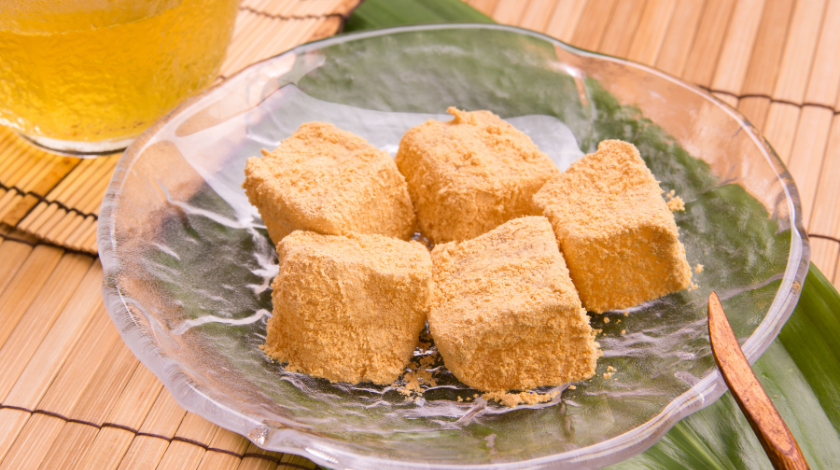
I still remember my first real encounter with warabimochi. It wasn’t in a fancy restaurant, but at a cramped, bustling summer festival in a small Tokyo suburb. The air was thick with the smell of yakisoba and frying chicken, and I was desperately looking for something to cut through the humidity. That’s when I saw it: a small vendor shop with a simple sign that said “Warabimochi.” The dessert itself looked unassuming—little white cubes dusted with what looked like toasted peanut powder, resting on a bed of ice. I ordered one, and from the first bite, I was captivated. It was cool, soft, and had the most incredible, gently chewy yet melting texture. It was nothing like the dense, sticky mochi I had tried before. That moment sparked a curiosity in me to learn everything about this delicate sweet.
So, what exactly is this treat that won me over? At its heart, warabimochi is a traditional Japanese wagashi, or confectionery, that is especially beloved during the hot summer months. If you imagine a dessert that sits somewhere between a firm jelly, a soft marshmallow, and a chewy mochi, you’re getting close. Its defining characteristic is its unique mouthfeel: it is wonderfully elastic and bouncy to the touch, yet it dissolves on the tongue with a clean, refreshing coolness. The flavor itself is subtly sweet and plain, which is intentional. It acts as a perfect canvas for its classic toppings, which provide the real burst of flavor.
Many people hear “mochi” in the name and think it’s a type of rice cake. This is the first and most important thing to clarify. Regular mochi, the kind you find in daifuku or ozoni soup, is made from pounded glutinous rice. That process gives it a thick, stretchy, and sometimes gooey consistency. Warabimochi, on the other hand, is not made from rice at all. Traditionally, it is made from the starch extracted from the root of the warabi, or bracken fern. This bracken starch is what gives warabimochi its signature jelly-like, translucent, and less sticky texture. Think of it this way: if regular mochi is like soft, pounded dough, warabimochi is like a delicate, edible gelatin made from plants. Because of this, it’s often naturally gluten-free, which is a great bonus for anyone with dietary restrictions.
The history of warabimochi is as refined as its texture. Its origins can be traced back to the Japanese aristocracy of the Nara and Heian periods, over a thousand years ago. Back then, the warabi starch was incredibly difficult and time-consuming to extract and process, making the resulting confection a luxurious delicacy reserved for the nobility and for special offerings at temples. It wasn’t until the Edo period, when production methods improved and sugar became more widely available, that warabimochi began to trickle down to the common people. Street vendors started selling it as a summer refreshment, much like the one I stumbled upon. This historical journey from an elite luxury to a popular seasonal street food adds a layer of depth to every bite, connecting you to centuries of Japanese culinary tradition.
Now, let’s talk about the star of the show: the texture. Achieving that perfect, bouncy-yet-melting quality hinges almost entirely on the starch. Authentic warabimochi uses pure warabi starch, which can be quite expensive. In modern times and in many home recipes, a blend of potato starch and katakuriko (potato starch) or even tapioca starch is often used to mimic the effect at a lower cost. The process involves dissolving the starch in water with sugar, then cooking it over heat while stirring constantly. This is where the magic happens. As the mixture heats up, it transforms from a milky liquid into a thick, transparent, and incredibly glue-like paste. It’s a workout for your arms, but watching the change is fascinating. Once cooked, it’s poured into a tray, chilled, and then cut into cubes.
Of course, plain jelly cubes are only half the experience. Warabimochi is defined by its classic duo of toppings. The most iconic partner is kinako. Kinako is simply roasted soybean flour, and it has a warm, nutty, slightly sweet flavor that is utterly delicious. The toasted aroma complements the cool, plain warabimochi perfectly. The cubes are typically tossed in kinako to coat them lightly. The second classic topping is kuromitsu, which translates to “black honey.” It’s not honey, but a dark, viscous sugar syrup made from kokuto, or Japanese black sugar. It has a rich, molasses-like flavor with a deep caramel complexity. Often, warabimochi is served with a drizzle of kuromitsu over the kinako-coated cubes, creating a perfect harmony of nutty, sweet, and deep flavors. Sometimes, you might find it served with a side of matcha powder for dipping, adding an earthy, bitter note.
If you’re feeling inspired to try warabimochi, you have a few options. In Japan, from late spring through summer, you can find it at wagashi specialty shops, department store food halls, and of course, at festivals and street stalls. Some shops sell it freshly made and kept on ice, which is the absolute best way to have it. Outside of Japan, your best bet is a local Japanese grocery store, often in the refrigerated or frozen dessert section. Asian supermarkets might also carry pre-packaged versions. And if you’re feeling adventurous, making it at home is entirely possible. While sourcing true warabi starch can be a challenge, many successful recipes use a combination of potato and tapioca starch to get very close to that authentic texture. The process is simple, though it requires constant stirring. The reward, however, is immense: a homemade, refreshing dessert that will transport you straight to a Japanese summer evening.
In conclusion, warabimochi is more than just a dessert; it’s a sensory experience that encapsulates a season. It represents a beautiful aspect of Japanese food culture—the appreciation of subtlety, texture, and seasonal refreshment. It’s not overly sweet or heavy. Instead, it’s a mindful treat that cools you down and offers a moment of simple pleasure. For me, it will always be tied to the memory of that humid festival, a delightful surprise in a humble setting. Whether you seek it out at a shop, attempt to make it yourself, or are just happy to know about it, warabimochi is a fascinating piece of Japan’s culinary story. It’s a testament to the idea that the most memorable foods are often the ones that feel refreshingly different and are rooted in a long, cherished history.
FAQ Section
Q: Is warabimochi gluten-free?
A: Traditionally, yes. Authentic warabimochi made purely from warabi (bracken) starch, sugar, and water is naturally gluten-free. However, always check pre-packaged versions or restaurant menus, as some modern variations or toppings might introduce gluten. When making it at home with potato/tapioca starch, it remains gluten-free.
Q: Can I make warabimochi with cornstarch or regular flour?
A: I wouldn’t recommend it for an authentic result. Cornstarch will set firmer and more opaque, like a typical pudding. Regular wheat flour will create a completely different, doughy texture and isn’t gluten-free. The unique texture relies on specific starches like bracken, potato, or tapioca.
Q: How do I store leftover warabimochi?
A: It’s best eaten fresh on the day it’s made. If you must store it, keep it in an airtight container in the refrigerator for up to 1-2 days. Be aware that it will harden and lose its ideal soft texture over time. Do not freeze it, as freezing will ruin its delicate structure.
Q: Why is my homemade warabimochi too hard/too soft?
A: Texture issues usually come from the starch-to-water ratio or cooking time. Too hard: you may have used too much starch or overcooked it. Too soft/never setting: you may not have cooked the starch mixture for long enough to fully activate the thickening power. Constant, vigorous stirring until it becomes very thick and transparent is key.
Q: Is warabimochi healthy?
A: Like most sweets, it should be enjoyed in moderation. Its primary ingredients are starch and sugar, so it is a carbohydrate-rich dessert. However, it is often lower in fat than many Western desserts. The kinako topping adds some protein and nutrients from soybeans.