Have you ever sat through a news segment about a major climate conference, heard world leaders make grand pledges, and then wondered, “But what does this actually mean for my town? What happens next?” I know I have. For years, I viewed climate change as this colossal, monolithic problem that only a colossal, monolithic solution could fix—a single global treaty to rule them all. It felt distant, slow, and often disheartening. That was until I stumbled upon the work of a Dutch professor named David Huitema. His research didn’t just add another layer of complexity; it did the opposite. It provided a map—a clearer, more pragmatic, and oddly more hopeful way to understand how real change is already happening, often far from the glittering podiums of global summits.
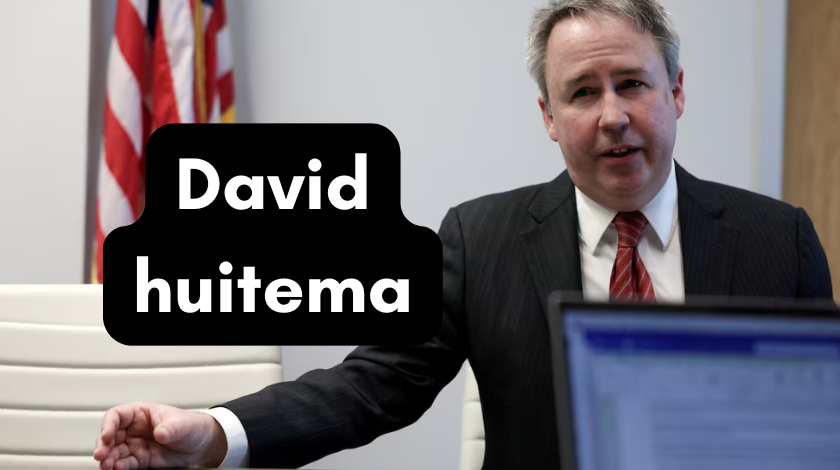
So, who is David Huitema? He’s not a celebrity activist, but his ideas are quietly influential. He’s a professor of Environmental Policy at the Vrije Universiteit Amsterdam, a serious scholar whose name is synonymous with a concept called “polycentric governance.” Now, before your eyes glaze over at the academic jargon, let me promise you: this is one of those ideas that, once you get it, completely changes how you see the world of environmental action. In essence, Huitema and his colleagues (like the famed Nobel laureate Elinor Ostrom) argue that tackling a wicked problem like climate change doesn’t require a single, top-down global government. Instead, it can be—and is being—addressed by many overlapping centers of authority working independently yet connectedly. Think of it not as a pyramid with a UN-shaped capstone, but as a bustling, dynamic web.
For decades, the dominant story was the top-down one. The 1997 Kyoto Protocol was its pinnacle: nations bargaining over binding emission targets. While historically important, this approach had clear flaws. It was slow, often held hostage by the least willing participant, and struggled with enforcement. Huitema’s work emerged from asking the critical “what next?” after such agreements. He looked at where policy actually gets implemented—in provinces, cities, regulatory agencies, and even within forward-thinking corporations. What he documented was a quiet revolution in climate governance.
Let’s break down this idea of polycentric climate governance. The “poly” means many. The “centric” refers to centers of decision-making. Imagine climate action as a patchwork quilt. Each patch—a city council passing a building efficiency code, a state government investing in a smart grid, a network of farmers adopting carbon-sequestering practices, a multinational company switching to 100% renewable power—is its own center of action. They are not waiting for permission from a global sovereign. They are acting out of self-interest, local pressure, economic opportunity, or moral conviction. This is the core of Huitema’s insight: effective global action may depend on encouraging and linking this multitude of local actions.
Why is this model so powerful? First, it enables experimentation. In a complex system, no one knows the perfect solution. When a hundred cities try a hundred different approaches to reduce transportation emissions, we get a real-world laboratory. Some ideas fail. Others succeed brilliantly. These successes, like London’s congestion charge or Copenhagen’s cycling infrastructure, can then be observed, learned from, and adapted by others. This “learning by doing” is something a slow-moving, one-size-fits-all global treaty could never achieve.
Second, it builds resilience. In the old top-down model, if the central authority fails or withdraws (think of a major nation pulling out of an accord), the entire system crumbles. In a polycentric system, if one center stumbles—a national government backsliding on policy—the others continue. The C40 Cities network, for instance, kept driving ambition even when some national governments were hesitant. This creates a stability that isn’t reliant on any single player.
Now, this isn’t just a rosy theoretical picture. Huitema is a rigorous researcher, and his work also examines the challenges. The biggest risk is chaos and inefficiency. If all these actions are uncoordinated, could they cancel each other out? Could they be just symbolic “greenwashing”? This is where the “governance” part is crucial. The centers aren’t isolated; they are connected. They learn from each other, compete in a “race to the top,” form networks to share best practices, and are held accountable by citizens and investors. The Paris Agreement is fascinating in this light. Unlike Kyoto, it’s built almost like a polycentric system. It sets a global goal but relies on nationally determined contributions (NDCs)—essentially, national-level patches for the quilt—and explicitly recognizes the role of non-state actors.
I saw this firsthand in my own community. A few years ago, my city council, citing both climate goals and economic savings, passed a resolution to power all municipal buildings with renewable energy by 2030. It wasn’t a federal mandate. It was a local decision influenced by peer pressure from a network of other cities, advocacy by local businesses in the solar sector, and vocal resident support. This is Huitema’s theory in microcosm. The action was local (a city), it was connected (influenced by a network), and it experimented (with new procurement models for green power).
In conclusion, David Huitema’s work offers us a vital lens for the 21st century. It moves us beyond the paralyzing narrative of waiting for global saviors. It shows that effective climate governance is already happening all around us, in the decisions of local leaders, business innovators, and community organizers. It’s messy, it’s decentralized, but it’s vibrant and adaptable. This doesn’t let national governments off the hook—their role in setting frameworks, funding, and regulating is irreplaceable. But it democratizes hope and agency. The fight against climate change isn’t a single, distant battle; it’s a million interconnected projects in our neighborhoods, workplaces, and regions. Understanding that isn’t just academic—it’s empowering. It tells us that our local engagement, our votes in municipal elections, and our community advocacy are not side shows. They are integral threads in the growing, resilient web of global response. That, to me, is a far more compelling and human story.
FAQ
Q: Who is David Huitema?
A: David Huitema is a leading professor of Environmental Policy at the Vrije Universiteit Amsterdam in the Netherlands. He is a prominent researcher and author known for his work on climate change governance, particularly the theory of “polycentric governance.”
Q: What is polycentric governance in simple terms?
A: In simple terms, it’s the idea that complex problems like climate change are best tackled by many different groups and levels of authority acting simultaneously, rather than by a single, top-down global government. Think of cities, states, companies, and nations all taking their own initiatives, while learning from and influencing each other.
Q: How does this differ from the Kyoto Protocol approach?
A: The Kyoto Protocol was primarily a top-down model, where binding targets were set for developed countries through international negotiation. Polycentric governance is bottom-up and multi-level, emphasizing action from subnational and non-state actors, with global agreements like the Paris Agreement acting more as a framework to encourage and record these actions.
Q: What is a real-world example of polycentric climate action?
A: The C40 Cities network is a prime example. Major cities around the world—from Tokyo to Toronto, Lagos to London—set their own ambitious climate targets, share data and strategies, and implement policies locally. Their collective action creates significant global impact independently of their national governments’ pace.
Q: What are the main criticisms of polycentric governance?
A: Critics point out that it can lead to a confusing patchwork of policies, potential for “greenwashing” (superficial action), and questions about whether all these decentralized efforts will add up to the massive, rapid global emission cuts needed. Ensuring coordination and accountability is the key challenge.
Q: How can an individual engage with this model of governance?
A: By recognizing that local action is core to the system. You can engage by participating in municipal climate plans, supporting local businesses with sustainable practices, voting in city and regional elections based on environmental platforms, and holding local institutions accountable. Your community is one of the vital “centers” of action.