Author:

  • Kocani, Macedonia: Discovering the Soul of the Rice Valley

    Kocani, Macedonia: Discovering the Soul of the Rice Valley

    Let’s be honest. When you first hear the name “Kocani,” if you hear it at all, it’s probably linked to one thing: rice. For years, that’s all I knew about it. In my mind, it was just that place on the map in eastern Macedonia, somewhere between the bigger cities, responsible for filling the nation’s bowls. I pictured endless fields and tractors, which, while lovely, didn’t exactly scream “must-visit destination.” How wrong I was. My first trip there was a lesson in how places, much like people, are never defined by just one thing. What I found was a town with a gentle soul, a rich historical heartbeat, and a warmth that doesn’t just come from its famous thermal springs.

    So, if you’re curious about this often-overlooked corner of Macedonia, pull up a chair. Let me tell you about Kocani, not from a dry guidebook, but from the perspective of someone who was genuinely surprised and charmed by it.

    Where in the World is Kocani?

    Before we dive into its stories, let’s get our bearings. Kocani isn’t a coastal resort or a mountain ski hub. Its charm is subtler, rooted in the land itself. You’ll find it nestled in the eastern part of North Macedonia, roughly a two-hour drive from the capital, Skopje, and about an hour and a half from the more tourist-trodden city of Strumica.

    The town sits comfortably in the Kocani Valley, a wide, fertile plain cradled by mountains. To the north, you have the Osogovo mountains, and to the south, the massive, brooding presence of Mount Plackovica. This geographical setup isn’t just pretty; it’s the secret to everything Kocani is. The mountains protect the valley, the rivers feed it, and the result is this incredibly lush, green oasis that feels worlds away from the arid landscapes you might see in other parts of the country. Driving into the valley, especially in late spring or early summer, is a visual treat. The patchwork of vibrant green rice paddies against the dark blue-grey of the mountains is a sight I still vividly remember.

    A Layered Past: Walking Through Kocani’s History

    You can’t understand a place without listening to its past, and Kocani has been whispering stories for centuries. This isn’t a history of grand, world-shaking battles, but one of steady life, trade, and cultural exchange. Evidence suggests people have lived here since Roman times, drawn by the fertile land and those healing thermal waters we’ll talk about later.

    But the two most significant layers on Kocani’s historical canvas are the Byzantine and the Ottoman. You can feel this duality just by walking through the town center. The most prominent landmark is the Kocani Mosque (Ahmed Bey Mosque), built in the 18th century. Its elegant minaret pierces the skyline, a beautiful example of Ottoman architecture. Standing quietly nearby is the St. Bogorodica Church, a 19th-century Orthodox church. They don’t compete; they coexist. This peaceful cohabitation tells you more about the town’s character than any history book could. It speaks of a community that has, for a long time, learned to live together. For me, sitting on a bench between these two buildings, watching locals go about their day, was a profound moment of quiet understanding.

    The Grain of Life: Why Kocani Rice is Famous

    Alright, let’s address the elephant in the room, or rather, the grain in the field. Yes, Kocani is, first and foremost, the rice bowl of Macedonia. And this isn’t just a minor fact; it’s the cornerstone of the local economy and identity. The Kocani Valley provides near-perfect conditions for rice cultivation: abundant water from the Bregalnica River and its tributaries, a warm climate, and that rich, flat land.

    But here’s what I learned from talking to a local farmer over a strong coffee: it’s not just about quantity; there’s a growing pride in quality. “Kocanski rice” is becoming a brand, a sign of something local and authentic. You’ll see it in markets across the country, and it forms the base of one of Macedonia’s most beloved comfort foods, sarma (stuffed cabbage rolls). Tasting sarma made with Kocani rice in Kocani itself is a different experience. The grains are plump, sticky in just the right way, and absorb the flavours beautifully. It’s a humble, everyday kind of magic, but it’s real. When you visit, buy a small bag from a local shop. It’s the tastiest souvenir you could take home.

    Beyond the Fields: What to Actually Do in Kocani

    If you think Kocani is just a drive-through town, think again. It rewards the curious traveler with some genuinely lovely experiences.

    First and foremost, you must visit the Kocani Spa (Banja). Located just a few kilometers from the town center, this is where the town’s subterranean gifts rise to the surface. The thermal water here is rich in minerals and is believed to help with rheumatism, skin conditions, and just general stress. The public bathhouse is a no-frills, local institution. It’s not a luxury spa; it’s a functional, social one. I spent an afternoon there, alternating between the hot indoor pools and the cooler air, and emerged feeling like I’d shed ten years of tension. The water has a distinct, smooth feel to it. For a more private experience, several hotels in the area have tapped into the springs for their own spa facilities.

    Back in town, take a leisurely walk. Start at the main square, shaded by trees, and just wander. Peek into the courtyard of the mosque. Admire the fading but still grand architecture of the old town houses. Visit the local museum to get a consolidated view of the archaeology and ethnography of the region. It’s small but heartfelt. The goal here isn’t to tick off a list of “top 10 attractions,” but to absorb the slow, friendly rhythm of local life. People will greet you, shopkeepers will chat, and the pervasive feeling is one of safety and calm.

    A Feast for the Senses: The Food and Festivals of Kocani

    Macedonia is a foodie paradise, and Kocani holds its own. The cuisine here is hearty, seasonal, and deeply connected to the land. Obviously, rice features heavily. Try rižot (a local risotto) or japrak (stuffed vine leaves). But don’t miss the freshwater fish from the local rivers, often grilled to perfection. The peppers and tomatoes from the valley are incredibly flavorful, making shopska salad taste like a revelation. My most memorable meal was at a family-run kafana (tavern) where the owner insisted I try a bit of everything. It was a messy, delicious, and utterly joyful affair.

    If you can time your visit, aim for late February or early March to experience the Kocani Carnival. This isn’t a small parade. It’s a massive, chaotic, and incredibly colorful explosion of energy that draws thousands. Locals spend months preparing elaborate, often satirical costumes. Groups dance through the streets in synchronized routines to pounding brass band music. The air is thick with confetti and laughter. It’s a celebration of spring, of life, and of shaking off the winter blues. I’ve been to many festivals, but the raw, community-driven joy of the Kocani Carnival is something special. It completely shatters any quiet, agricultural image you might have had of the town.

    When to Go and How to Feel It

    The best time to visit Kocani depends on what you want. Late spring (May-June) is magical, with the rice fields a brilliant emerald green and the weather perfect for exploring. Early autumn (September-October) brings golden hues to the landscape and the satisfaction of harvest. Summer can be hot, but that’s when the outdoor cafe life is in full swing. And, as mentioned, late winter is for the Carnival enthusiasts.

    To truly feel Kocani, you have to slow down. Have a three-hour coffee. Talk to the person next to you. Soak in the public baths. Buy fruit from the market. Let go of the need for constant stimulation and allow the town’s gentle, resilient spirit to reveal itself to you.

    Conclusion: The Quiet Allure of Authenticity

    Kocani won’t bombard you with epic landmarks or world-famous sites. What it offers is something rarer in our age of overtourism: authenticity. It is a working town, a community, a piece of real Macedonia untouched by mass tourism. It’s the taste of perfect rice, the feel of healing water on your skin, the sound of a carnival trumpet, and the sight of a mosque and a church sharing the same sky.

    It taught me that the most rewarding travels are often to places that don’t shout, but whisper. And in Kocani’s whisper, you can hear the story of the land, the resilience of its people, and the simple, profound beauty of everyday life. It’s not just a stop; it’s an experience. And I, for one, am so glad I finally listened.

    Frequently Asked Questions (FAQ)

    Q: Is Kocani worth visiting?
    A: Absolutely, if you enjoy authentic cultural experiences, thermal spas, and beautiful rural landscapes over crowded tourist hotspots. It’s a perfect 1-2 day getaway to see a different side of Macedonia.

    Q: How do I get to Kocani?
    A: The easiest way is by car from Skopje (via the A4/E65 highway) or from Strumica. There are also regular buses from Skopje’s main bus station, which take about 2-2.5 hours.

    Q: What is the best souvenir from Kocani?
    A: A bag of authentic Kocani rice is the classic choice. You can also look for local honey, rakija (fruit brandy), or handicrafts.

    Q: Are the Kocani hot springs open to the public?
    A: Yes, the public spa (Banja Kocani) is open year-round for a very affordable fee. Several hotels also offer private spa access to their guests.

    Q: What else is there to see near Kocani?
    A: You can easily pair a trip to Kocani with visits to the archaeological site of Stobi, the wine region of Strumica, or the scenic lakeside town of Berovo.


  • MSAs Explained: What is a Medical Savings Account & Is It Right for You?

    MSAs Explained: What is a Medical Savings Account & Is It Right for You?

    I remember sitting at my kitchen table a decade ago, staring at a stack of health insurance paperwork from my new employer. It was a small business, under 50 people, and among the options was something called an “Archer MSA” paired with a high-deductible plan. I had heard of FSAs and was starting to hear whispers about HSAs, but an MSA? I was completely lost. If you’re feeling that same confusion today, you’re not alone. Medical Savings Accounts (MSAs) are a bit of a relic, a precursor to the more common Health Savings Account (HSA), but they’re still out there, and for a very specific group of people, they can be relevant. Let’s untangle what an MSA is, in plain English, and figure out if it’s something you should even consider.

    What is an MSA? A Simple Definition.

    At its heart, a Medical Savings Account (MSA) is a tax-advantaged savings account created specifically for paying medical expenses. Think of it as a special bank account that gets a favorable nod from the IRS. You or your employer can put money into it, and that money isn’t taxed going in. It grows without being taxed each year, and when you take it out to pay for qualified medical expenses—things like doctor’s copays, prescriptions, glasses, or dental work—it’s not taxed coming out either. This “triple tax advantage” is the golden ticket.

    The catch, and it’s a big one, is that you can only open and contribute to an MSA if you have a specific type of high-deductible health plan (HDHP) and you fall into certain categories, which we’ll get into. The most common type you’ll hear about is the Archer MSA, named after the Congressman who sponsored the bill. These were essentially the test model that later evolved into the HSA program.

    How an MSA Actually Works (Step-by-Step)

    Let’s make this practical. Imagine you work for a small local design firm.

    1. Eligibility Check: Your employer offers a qualified high-deductible health plan (HDHP) that meets specific IRS deductible limits (these change yearly). The firm has 40 employees, which fits the “small employer” category for an Archer MSA.

    2. Account Setup: You choose the HDHP + MSA option. Your employer might help you set up the MSA with a bank or custodian, or you may do it yourself.

    3. Funding: Over the year, you decide to contribute, say, $2,000 to your MSA. Your employer might also contribute on your behalf. This $2,000 is deducted from your taxable income. If you’re in the 24% tax bracket, you just saved $480 on your tax bill right away.

    4. Spending: You need a filling at the dentist, costing $200. You pay the dentist using a debit card linked to your MSA, or you pay out-of-pocket and reimburse yourself from the MSA. That $200 is tax-free.

    5. The Rollover Magic: Unlike a “use-it-or-lose-it” Flexible Spending Account (FSA), any money you don’t spend in your MSA by December 31st doesn’t vanish. It rolls over, every year, indefinitely. It sits in your account, and if your MSA provider allows, it can even be invested in mutual funds or other assets to grow for future medical needs.

    This rollover feature is critical. It turns the MSA from a simple spending account into a potential long-term healthcare nest egg. You’re saving for healthcare, not just setting aside money to be spent immediately.

    Are You Eligible for an MSA? The Strict Rules.

    This is where MSAs get narrow. You cannot have one just because you want one. The rules are strict:

    1. You must be enrolled in a “qualified” High-Deductible Health Plan (HDHP). The IRS defines the minimum deductible and maximum out-of-pocket costs for these plans, and they adjust them annually. It’s not just any high-deductible plan.

    2. You must be either:

      • A small business employee: Your employer must have 50 or fewer employees.

      • Self-employed: This includes sole proprietors and freelancers.

    If you work for a large corporation with thousands of employees, you are almost certainly not eligible for an MSA. This is the primary reason HSAs have become far more popular—they opened up the high-deductible savings account model to everyone with a qualified HDHP, regardless of employer size.

    MSA vs. HSA: The Critical Difference You Must Know.

    This is the most important part of the conversation. HSAs didn’t replace MSAs; they succeeded and expanded upon them. If you have an old MSA, you can keep it and even roll it into an HSA. But for someone starting fresh, the HSA is almost always the better option, and here’s why.

    • Eligibility: As mentioned, MSAs are for the small business/self-employed niche. HSAs are for anyone with a qualified HDHP.

    • Contribution Limits: HSA contribution limits are significantly higher. For 2024, an individual can put up to $4,150 in an HSA, compared to an MSA where the limit is 65% of your plan deductible (individual) or 75% (family). This often results in a much lower cap for MSAs.

    • Portability and Control: Both are portable (you own them). However, because HSAs are more common, they come with far better tools, investment options, and lower fees from a wide range of providers. Finding an MSA custodian today can be a challenge.

    • Employer Contributions: Both allow them, but it’s far more standardized and common with HSAs.

    In my opinion, unless you are grandfathered into an old MSA with great terms or have a very specific small business scenario, the HSA is the superior vehicle in almost every way. It offers more flexibility, higher savings potential, and is easier to manage.

    The Real Pros and Cons from a User’s Perspective

    Let’s be balanced. From my experience talking to people who’ve used them, here’s the real scoop.

    Pros:

    • Tax Shelter: The triple tax advantage is real and powerful for covering medical costs.

    • Long-Term Savings: The annual rollover means you can build a substantial fund for future medical expenses, especially in retirement.

    • You Own It: Like an HSA, it’s your account. Change jobs? The MSA comes with you.

    • Niche Benefit: For a self-employed person in the early 2000s, it was a fantastic, unique tool.

    Cons:

    • Extremely Limited Access: The eligibility rules are a major barrier.

    • Overshadowed by HSAs: HSAs do everything an MSA does, but better and for more people. Finding information or providers for MSAs is harder.

    • Lower Contribution Potential: The formula-based limits are often less generous than the straightforward, high limits of an HSA.

    • Complexity: Explaining the “65% of your deductible” rule to someone is more confusing than saying “the 2024 HSA limit is $4,150.”

    How to Open and Manage an MSA (If You Can)

    If you’ve checked the boxes and believe you’re eligible, the path isn’t as simple as going to a major bank’s website. Few large institutions actively promote new MSAs. Your starting point should be:

    1. Talk to Your Employer: If they offer the qualified HDHP, they likely have a relationship with a custodian (often a local bank, credit union, or specialty insurer) that can set it up.

    2. Consult a Tax or Financial Advisor: They can help navigate the specific rules and may know of institutions that still offer Archer MSA accounts.

    3. Look for Specialty Health Insurance Providers: Some companies that cater specifically to the small business and self-employed health market may still offer MSA services.

    Once open, manage it meticulously. Keep every receipt for medical expenses, even if you don’t plan to reimburse yourself immediately. You can reimburse yourself from the MSA for that expense at any time in the future, tax-free. Consider the investment options if your balance grows. The goal is to let this money grow for the long haul.

    Conclusion

    So, is a Medical Savings Account right for you? The honest answer is: probably not. For the vast majority of people, the Health Savings Account (HSA) is the modern, flexible, and more powerful version of this concept. However, understanding MSAs is important. It gives you context for how these tax-advantaged health accounts evolved. If you are self-employed or work for a very small business that has maintained an old Archer MSA program, it’s a legitimate tool that can provide real tax benefits and help you save for healthcare costs. But if you’re starting from scratch today, your energy is almost certainly better spent ensuring you have a qualified HDHP and opening an HSA. The principles are the same—save wisely, use tax advantages, and plan for future health needs—but the HSA simply gives you a bigger, better vehicle for the journey.

    Frequently Asked Questions (FAQ)

    Q: Are MSAs still available in 2024?
    A: Yes, Archer MSAs still exist under the original legislation. However, new contributions can only be made if you are covered by a qualified HDHP and are either self-employed or work for a small business (under 50 employees) that offers one. It is a niche product.

    Q: Can I have both an MSA and an HSA?
    A: No, you cannot contribute to both an MSA and an HSA in the same year. However, you can own both accounts. For example, you might have an old MSA from a previous job and now contribute to an HSA with your new employer’s plan. You must stop contributing to the MSA to be eligible for the HSA.

    Q: What happens to my MSA if I change to a job at a big company?
    A: Your MSA money remains yours forever. You simply cannot make new contributions to it unless you again become eligible (e.g., return to self-employment). You can still use the existing funds for qualified medical expenses tax-free. You also have the option to roll the MSA funds into an HSA, which is often a good administrative move.

    Q: What can I use my MSA money to pay for?
    A: You can use it for a wide range of IRS-qualified medical expenses. This includes deductibles, copays, prescriptions, dental and vision care, certain over-the-counter medicines, and even some medical equipment. The IRS Publication 502 provides a full list.

    Q: Is an MSA better than an HSA?
    A: In almost all cases, no. The HSA has higher contribution limits, is available to a much wider population, and is supported by more financial institutions. The MSA’s main advantage is its historical existence for a specific group; for anyone newly eligible, an HSA is typically the better choice.

  • Soleás: The Soul of Flamenco Explained

    Soleás: The Soul of Flamenco Explained

    I remember the first time a soleá truly stopped me in my tracks. It wasn’t in a grand theatre, but in a small, smoky peña in Seville. The chatter faded, and a singer, a woman with a face etched with lines that spoke of life lived deeply, took a breath that seemed to pull the air from the room. What followed wasn’t just a song; it was a raw, unfiltered eruption of emotion. It was sorrow, but not despair. It was pride, resilience, and a profound beauty that ached. I didn’t understand the Andalusian Spanish lyrics then, but I felt their meaning in my bones. That is the power of soleá. It doesn’t just speak to you; it bypasses the intellect and speaks directly to the soul. If you’ve ever been curious about flamenco’s deep heart, let me guide you into the world of soleá, the style many consider to be its very foundation.

    What is Soleá? The Soul of Flamenco

    Let’s start simply. Soleá (pronounced so-leh-AH, and often called Soleares in its plural form) is not just a song or a dance. It is one of the most important fundamental forms, or palos, of flamenco. Think of flamenco as a vast, intricate language. If that language had a core dialect, a way of speaking that held its most essential grammar and vocabulary, that would be soleá. It is often categorized under Cante Jondo or “deep song,” which refers to the most serious, profound, and emotionally weighty styles of flamenco.

    The word itself is believed to come from soledad, the Spanish word for “solitude” or “loneliness.” And that gives you the first clue to its character. Soleá is an exploration of deep, often melancholic themes. But calling it simply “sad” is a massive oversimplification. It is a complex portrait of the human condition. It expresses loneliness, yes, but also longing, loss, existential reflection, stoic endurance, and even a defiant joy in survival. It is the sound of looking into the abyss, then turning that gaze into something breathtakingly beautiful.

    The Deep Roots: History and Origin of Soleá

    Pinpointing the exact birth of any folk art is tricky, but most historians agree that soleá crystallized as a distinct form in the 19th century in the region of Andalusia in southern Spain. Its roots are a beautiful, tangled tree growing from many seeds. It draws from the older, more rhythmic cañas and polos, and it carries within it echoes of the rich cultural mosaic of Andalusia. You can hear influences from ancient Andalusian folk songs, Sephardic Jewish laments, and even the Moorish call to prayer in its melodic contours. It’s believed to have emerged strongly in the Triana district of Seville, Jerez de la Frontera, and Cádiz.

    It was in the cafés cantantes (singing cafes) of the 1800s that soleá began to take its modern shape, moving from a largely private, family-based expression to a more formalized art on stage. This period saw the rise of legendary singers, or cantaores, who defined the style. Their names, like El Fillo, La Andonda, and later, the monumental Tomás “El Nitri,” are whispered with reverence. They were the architects of the soleá we recognize today.

    The Architecture of Emotion: Soleá Compás Explained

    This is where many beginners get intimidated, but stay with me. The magic of soleá is held within its rhythmic structure, called the compás. Every flamenco style has its own unique compás, a recurring cycle of accents that is the heartbeat of the performance. Soleá’s compás is a 12-beat cycle, but it’s not counted like a waltz (1-2-3). The accents fall in a very specific, syncopated pattern that gives it its distinctive swaying, yet driving, feel.

    Here’s the simplest way I learned to feel it, not just count it. Tap your hand on a table in a steady pulse:
    1 – 2 – [3] – 4 – 5 – [6] – [7] – 8 – [9] – 10 – [11] – 12.

    The beats in brackets ([3], [6], [8], [10], [12]) are where the strong accents typically fall, especially beats 3, 6, 8, 10, and 12. Beat 12 is a particularly strong downbeat, like a sigh or a punctuation mark. The guitar builds tension and release around this cycle, the singer phrases across it, and the dancer’s footwork (zapateado) creates breathtaking percussive dialogues with it. Understanding this compás is the key to unlocking why soleá feels the way it does. It’s not a straight line; it’s a spiraling, emotional journey that comes back to its start, ready to build again.

    More Than Just Music: The Three Forms of Soleá

    Soleá is a trinity. It exists in three interconnected forms: singing (cante), guitar (toque), and dance (baile). You can have a performance with just one, but they are most powerful when in conversation.

    Cante: The Voice of Soleá
    The singing is the undisputed center. A cantaor or cantaora singing soleá is undertaking a monumental task. The voice is often raw, gritty, and strained, not for lack of technique, but as an aesthetic choice to convey depth. Melodies weave around the guitar, often starting with a long, drawn-out “Ay…” that sets the emotional tone. The lyrics are poetic, symbolic, and deeply personal. They might speak of a mother’s pain, a lover’s betrayal, or philosophical questions about life and death. The singer must not only have vocal power but also a profound understanding of duende—that elusive spirit of emotional authenticity that gives you chills.

    Toque: The Guitar of Soleá
    The flamenco guitarist provides the harmonic and rhythmic foundation. Soleá is traditionally played in the Phrygian mode (centered around E, with frequent use of F natural), giving it that instantly recognizable “Spanish” sound that feels both ancient and haunting. The guitarist plays the compás, but also improvises melodic passages called falsetas between the singer’s lines. These falsetas are not just pretty tunes; they are emotional commentaries, answering the singer’s cry or setting up the next verse. Great soleá guitarists like Paco de Lucía, Manolo Sanlúcar, and Niño Ricardo didn’t just play notes; they painted soundscapes of darkness and light.

    Baile: The Dance of Soleá
    The dance of soleá is considered one of the most serious and majestic forms for a female dancer (bailaora). It is not flashy or frantic. It is an internalized, powerful expression. The posture is proud, the arms move with a sculptural grace, and the focus is often inward. The footwork is complex and percussive, but it serves the emotion, not just showcases skill. A soleá dance is a study in controlled power and deep dignity. It’s a visual representation of bearing a great weight with grace.

    Feeling the Soleá: Common Themes and Lyrics

    To listen to soleá is to step into a world of poetic imagery. The lyrics are rarely literal narratives. They use metaphor, nature, and religious allusion. You’ll hear about the “dark wells of the eyes,” the “bitter lemon” of fate, pleas to the Virgin Mary, and reflections on the “black horses” of time. A classic example, often attributed to singer Antonio Chacón, translates roughly to: “My heart is a dark well / Deep and cold, what a pity / Where all the sorrows of the world / Have come to fall.” It’s not a cheerful sentiment, but when sung with conviction, it becomes a shared catharsis, a beautiful acknowledgment of universal pain.

    How to Start Listening to Soleá: Key Artists and Recordings

    Don’t start with a dusty, archival recording from 1920. Ease your way in. For a masterclass in modern cante, find the album “La Leyenda del Tiempo” by Camarón de la Isla, which revolutionized flamenco but is rooted in forms like soleá. For pure, traditional power, listen to Enrique Morente, especially his earlier work. For guitar, Paco de Lucía’s album “Fuente y Caudal” has incredible soleá guitar work. For dance, watch videos of Carmen Amaya (a historic figure of fierce power) or contemporary masters like Eva La Yerbabuena, whose soleá is a masterclass in subtle intensity.

    Soleá vs. Other Palos: Finding Its Family

    Soleá is the matriarch of a whole family of styles. Its closest relative is Seguiriya, which is even darker and more austere, with a different 12-beat compás (accents on 1, 3, 5, 8, and 11). Alegrías is like its sunnier cousin; it shares the same 12-beat rhythmic structure but is faster, in a major key, and full of festive energy. Think of Soleá as the deep, introspective night and Alegrías as the bright, celebratory morning that follows. Other palos like Bulerías evolved from Soleá, taking that compás and speeding it up into a frenetic, playful, and complex frenzy.

    Conclusion

    Soleá is not entertainment in the casual sense. It is an offering, a ritual of shared humanity. It asks for your attention and your emotional investment. In a world that often feels shallow and fast, sitting with a soleá is a radical act of slowing down and listening to the depths. It teaches us that pain, when transformed through art, can be the source of immense beauty and connection. You don’t need to be from Andalusia to understand it. You just need to have lived, to have felt joy and sorrow. The next time you search for music that has weight, that has history and soul, seek out a soleá. Let that first, mournful “Ay…” wash over you. You might just find, as I did, that it speaks a language your heart has always known.

    FAQ Section

    Q: How do you pronounce “Soleá”?
    A: It’s pronounced so-leh-AH. The accent on the final ‘á’ means you put the stress on that last syllable.

    Q: Is Soleá always sad?
    A: While its primary emotional landscape is profound and often melancholic, it’s more accurate to call it deeply emotional. It conveys dignity, resilience, and catharsis, which can be powerfully uplifting to experience.

    Q: Can men dance Soleá?
    A: Traditionally, soleá is most commonly associated with female dancers due to its particular aesthetic of internalized power and grace. However, men certainly do dance it, bringing a different but equally valid interpretation of strength and composure. Flamenco is increasingly breaking from strict gender roles.

    Q: What is the best way for a beginner to learn the Soleá compás?
    A: Start by listening! Find a simple soleá guitar recording and just try to clap on beats 3, 6, 8, 10, and 12. Don’t worry about getting it perfect at first. The goal is to internalize the feel of that lopsided, swaying rhythm. There are also many excellent slow-tempo tutorials on YouTube.

    Q: Who is considered the greatest Soleá singer of all time?
    A: This is highly debated among aficionados, which is part of the fun! Historical names like Tomás “El Nitri” and Antonio Chacón are foundational. In the 20th century, Antonio Mairena is a colossal figure who dedicated his life to preserving and systematizing “deep song” like soleá. More recently, Enrique Morente and Camarón de la Isla are revered as revolutionary geniuses who carried the form into the modern era.

  • Moldavite Uncovered: Your Honest Guide to the Cosmic Stone of Transformation

    Moldavite Uncovered: Your Honest Guide to the Cosmic Stone of Transformation

    Have you ever held a piece of ancient history that came from the stars? I’m not talking about poetry. I mean a literal piece of Earth that was forged in the unimaginable heat of a meteorite impact millions of years ago. That’s Moldavite. The first time a friend placed a small, fern-green piece in my hand, I wasn’t prepared for its texture. It wasn’t smooth like river glass. It was sculpted, almost like it had been folded and etched by invisible forces. It felt… alive. And that was before I’d even heard of its wild reputation in the spiritual community.

    Today, Moldavite is everywhere online, shrouded in equal parts wonder and mystery. Some call it the ultimate stone for spiritual awakening. Others warn beginners to steer clear. As someone who has collected crystals for years and has a deep respect for both geology and personal spirituality, I want to give you a grounded, honest, and complete picture. Let’s unravel the story of this cosmic gem together, from its explosive birth to how you might connect with it today.

    What Exactly Is Moldavite? Spoiler: It’s Not a Regular Crystal

    Let’s start with the cold, hard facts, because they’re actually the most fantastic part. Moldavite is a natural glass. But it didn’t form inside the Earth like obsidian. Scientists call it a “tektite.”

    Here’s the simple version of its origin story. About 15 million years ago, a giant meteorite, likely over a kilometer across, slammed into what is now modern-day Germany. The energy released was beyond comprehension—millions of times more powerful than our largest nuclear bombs. It instantaneously vaporized the meteorite and a huge amount of the Earth’s crust, hurling this superheated, molten soup of rock and space debris high into the atmosphere.

    As this material rained down hundreds of miles away, primarily over what is now the Czech Republic (formerly part of Moldavia, hence the name), it cooled and solidified in mid-air, forming those distinctive, sculpted shapes. So, Moldavite is quite literally a fusion of Earth and space. It’s a child of catastrophe and beauty. Whenever I hold mine, I try to wrap my head around that journey. It’s a tangible connection to a cosmic event, which, in my opinion, is its truest magic.

    From Geological Wonder to Spiritual Powerhouse: Understanding Moldavite’s Meaning

    So how did this rare green glass from a Czech field become a legendary icon in metaphysical circles? Its journey is fascinating. For a long time, it was simply a geological curiosity. Then, in the 20th century, as the New Age movement grew, people began to sense something unique about it.

    The meaning attached to Moldavite is almost as intense as its formation. It’s widely known as the “Stone of Transformation” and the “Holy Grail of crystal enthusiasts.” The common belief is that it carries an extremely high vibrational frequency because of its extraterrestrial origin. Think of it like a spiritual accelerator or a catalyst.

    People turn to it for:

    • Spiritual Awakening: It’s said to rapidly open and align the chakras, particularly the heart chakra (which aligns with its beautiful green color).

    • Deep Transformation: It has a reputation for bringing about significant life changes—often quickly. The idea is that it shakes up stagnant energy to make way for new growth, even if that process feels disruptive at first.

    • Enhancing Synchronicity: Many users, myself included, report noticing more “meaningful coincidences” after beginning to work with it.

    • Cosmic Connection: It’s seen as a bridge to higher consciousness or a tool for connecting with otherworldly guidance.

    I remember when I first started wearing a small Moldavite pendant. I didn’t experience any lightning-bolt moment. Instead, I went through a period of about three weeks where I felt incredibly restless and introspective. Old memories surfaced, and I felt a strong, undeniable urge to declutter my life—not just my closet, but old friendships and habits that no longer served me. Was it the Moldavite? I can’t prove it scientifically. But the timing was precise, and the direction of the change felt positive, albeit challenging. This leads perfectly to the most talked-about aspect of this stone.

    The “Moldavite Flush”: Let’s Talk About the So-Called Side Effects

    This is the part that often scares beginners. Search online, and you’ll find dramatic stories of the “Moldavite flush”—a wave of intense physical heat, anxiety, dizziness, or vivid dreams that some people report when they first touch it.

    Here is my very honest, experience-based opinion. Moldavite’s energy is potent and unlike that of most Earth-formed crystals. If you are sensitive to energy, you will likely feel something. For me, it was a distinct tingling in my palm and that restlessness I mentioned. For others, it might be nothing more than a sense of curiosity.

    The key is respect and moderation. If you’re new, don’t start by sleeping with it under your pillow or wearing a huge piece 24/7. This isn’t a race. Sit with it for just 15 minutes during meditation. Hold it and observe. See how you feel. The idea is to allow your own energy to get acquainted with its frequency gradually. I always advise listening to your body above any online anecdote. If it feels overwhelming, put it down and come back later. There’s no prize for enduring discomfort.

    Your Most Important Task: How to Spot Real Moldavite in a Sea of Fakes

    Due to its massive popularity, the market is flooded with imitations. Most fake Moldavite is just green glass, often from China, melted and pressed into molds. Buying a fake isn’t just a waste of money; it’s a missed opportunity to connect with a genuinely unique piece of our planet’s history. Here’s how to protect yourself:

    1. The Texture is King: Real Moldavite is never perfectly smooth. It has a sculpted, almost “jelly-like” or “folded” texture with deep, flowing grooves and irregularities called “lunules.” Run your finger over it. It should feel detailed and intricate.

    2. The Color is a Hint: Genuine Moldavite ranges from a pale, translucent sea-foam green to a deeper, earthy forest green. It is not neon green, emerald green, or blue-green. The color is usually uneven.

    3. Look for Imperfections: Bubbles, internal lechatelierite (wispy, white inclusions), and signs of natural weathering are good signs. Too-perfect pieces are a red flag.

    4. Buy from Reputable Sellers: This is where EEAT (Experience, Expertise, Authoritativeness, Trustworthiness) is crucial. Look for sellers who specialize in tektites or Czech Moldavite. They should provide a certificate of authenticity from a Czech source, not a generic one. Read reviews meticulously. A trustworthy dealer will be transparent about the stone’s origin (specific locality in the Czech Republic is a plus) and will happily show you raw, uncut pieces alongside jewelry.

    When I bought my first serious piece, I spent weeks researching sellers. I chose a small, family-run shop in the Czech Republic that had been in business for decades. Their knowledge was evident, and they sent the piece with a detailed geological report. That peace of mind made the entire experience better.

    Living with Moldavite: Cleansing, Charging, and Simple Practices

    Once you have your authentic piece, treat it as the special artifact it is.

    • Cleansing: Because of its high vibration, many believe it doesn’t need cleansing. I still like to give mine a reset. Avoid salt water or harsh chemicals, as they can damage its surface. Instead, gently smudge it with sage smoke, place it on a bed of selenite, or briefly rinse it under lukewarm running water and pat it dry.

    • Charging: Place it in moonlight (a full moon is beautiful) or in sunlight for short periods. Some like to bury it in the earth for a day to reconnect it with its terrestrial roots.

    • Using It: Start simple. Wear it as a pendant over your heart. Hold it during meditation, setting a clear intention for growth and positive change. Place it on your desk if you’re seeking a shift in your career or creativity. Let the relationship develop naturally.

    Conclusion: A Stone of Respect, Not Fear

    Moldavite isn’t a magical fix, and it’s certainly not something to be feared. At its core, it is one of Earth’s most incredible geological records—a survivor of a primordial cosmic dance. The spiritual properties attributed to it speak to humanity’s desire for growth, connection, and transcendence.

    If you feel drawn to it, approach it with curiosity and respect, not because of viral TikTok trends, but because its true story resonates with you. Start small, buy wisely from trusted sources, and listen to your own intuition above all else. It may just become a powerful companion on your journey, reminding you that even from the most chaotic events, something uniquely beautiful can be created.

    FAQ Section

    Q: Is Moldavite dangerous?
    A: No, the stone itself is not physically dangerous. However, its reputed energetic intensity can be emotionally or mentally challenging for some sensitive individuals. Always use it mindfully and in moderation.

    Q: How much does real Moldavite cost?
    A: Authentic Moldavite is rare and its price reflects that. Small, rough pieces can start around $20-$50, while larger, jewelry-quality pieces can cost hundreds or even thousands of dollars. Extremely low prices are a major red flag for fakes.

    Q: Can I sleep with my Moldavite?
    A: Many people do, but if you are prone to vivid dreams or insomnia, it might be too stimulating. I recommend trying it for a short nap first to see how you react.

    Q: What chakra is Moldavite for?
    A: It is most commonly associated with the Heart Chakra (Anahata) due to its green color, but because it’s said to align all chakras, it’s also linked to the Third Eye (intuition) and Crown (spiritual connection) chakras.

    Q: How hard is Moldavite?
    A: It has a Mohs hardness of about 5.5. This means it can be scratched by materials like quartz. Be careful wearing it in rings or bracelets that might knock against hard surfaces. Pendants are generally safest.

    Q: Why do I feel sad or anxious when I wear Moldavite?
    A: This isn’t uncommon. As a catalyst for change, it can bring buried emotions to the surface to be processed and released. If these feelings persist, take a break from wearing it and focus on gentle self-care. The stone might be asking you to confront something.

  • Carpentry for Beginners: Your First Steps to Woodworking & DIY Projects

    Carpentry for Beginners: Your First Steps to Woodworking & DIY Projects

    Have you ever looked at a plain piece of wood and imagined it becoming something more? A bookshelf holding your favorite stories, a sturdy bench for your garden, or even a simple box to keep treasures in. That act of transformation, of creating something solid and useful from raw material, is at the heart of carpentry. It’s a skill that feels almost magical, but I’m here to tell you it’s wonderfully accessible. If you’ve ever felt the urge to build but didn’t know where to start, you’re in the right place. This guide is your friendly welcome into the world of carpentry.

    Let’s clear something up first. People often use “carpentry” and “woodworking” like they’re the same thing. While they’re close cousins, there’s a subtle difference I’ve learned over the years. Traditionally, carpentry is about the structural stuff – framing houses, building roofs, installing flooring. It’s often done on-site and is about making things strong, square, and functional. Woodworking, on the other hand, tends to focus on finer, detail-oriented projects like furniture, cabinets, and decorative objects, usually in a workshop. Think of it like this: a carpenter builds the skeleton of your house, and a woodworker crafts the kitchen table that goes inside it. Today, especially for hobbyists, the lines have blurred beautifully. What we’re talking about here is really the foundational skills that apply to both – the joy of working with wood.

    Before we even pick up a tool, we need to talk about the single most important part of any project: safety. This isn’t a boring lecture; it’s the golden rule. My own wake-up call came early when a tiny splinter flew past my safety glasses. It was a harmless incident, but it drilled the lesson home. Always, always wear safety glasses. Sawdust and flying debris don’t care about your plans. When using loud power tools like routers or planers, hearing protection is non-negotiable. A dust mask is wise for sanding. And perhaps the most important tool is your mind. Be present. Don’t work when you’re exhausted or distracted. Rushing is the fastest way to make a mistake, and in this craft, mistakes can be more than just a ruined board.

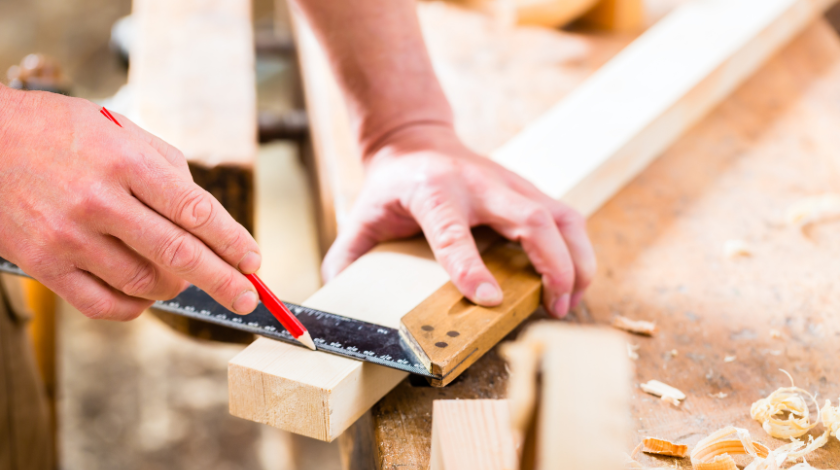
    Now, the fun part: tools. Walking into a hardware store can be overwhelming. You don’t need to buy the entire aisle. Start simple. Your true beginner’s kit has just a few heroes. First, a tape measure. A 25-foot Stanley PowerLock is an industry standard for a reason. Second, a quality pencil and a combination square. This little L-shaped metal tool is your best friend for marking straight lines and checking for square, which is the secret code for “perfectly 90 degrees.” For cutting, a circular saw is the most versatile first power tool. It’s the workhorse. Pair it with a good straight edge or a speed square to guide it. You’ll need a drill/driver. A cordless combo kit is a fantastic investment. For joining things, start with a hammer, some screws (I prefer star-drive or square-drive, as they strip less than Phillips), and a bottle of wood glue. A sanding block and some assorted grit sandpaper (start with 120-grit) will round out your kit. That’s it. With these, you can build a surprising amount.

    Facing the lumber rack is like being in a library where all the books are in a foreign language. Let’s translate. You’ll mainly encounter softwoods like pine, spruce, and fir. They’re lighter, generally cheaper, and easier to work with, making them perfect for practice. Hardwoods like oak, maple, and walnut are denser, more expensive, and used for fine furniture. Then there’s plywood – sheets made of thin wood layers glued together. It’s stable and doesn’t warp easily. A pro-tip: wood at big-box stores is often wetter and can warp as it dries in your home. For early projects, consider “project panels” or ask for the straightest boards you can find. Don’t be shy about picking through the pile!

    All of carpentry rests on three pillars: Measuring, Marking, and Cutting. Get these right, and everything else follows. The old saying “measure twice, cut once” is gospel. Use your tape measure clearly. When marking a cut line, use your combination square to draw a sharp, fine line all around the board, not just on the top. This “knife wall” helps you see the line from all angles. For cutting with your circular saw, always support your wood. Never let it pinch the blade. Use sawhorses or even a piece of rigid foam on the ground. The key to a straight cut is guiding the saw’s base plate along your square, not just following the line with your eye. Your first cuts will be wobbly. That’s okay. Practice on scrap wood. I still have my first, hilariously crooked cut piece of two-by-four. It’s a trophy of progress.

    Let’s build something! Your first project shouldn’t be a dining table. Start small and successful. A simple, wall-mounted shelf is perfect. You’ll practice measuring, cutting, and fastening. For a basic 24-inch shelf, you’ll need a 1×8 pine board (which is actually 0.75 inches thick and 7.25 inches wide – that’s a whole other story about “nominal” sizing!), two shelf brackets, and your tools. Cut the board to length. Sand all the edges smooth, rounding them over slightly. Apply a finish – even a simple wipe-on polyurethane or a coat of Danish oil makes wood look and feel amazing. Then, using your level, mark on the wall where the brackets go, screw them into the wall studs, and place your shelf on top. The moment you stand back and see something you made, holding a plant or a book, is addictive. That feeling is why people get into this craft.

    As you gain confidence, you’ll naturally want to learn stronger construction methods. This is where joinery comes in – the art of connecting wood without relying solely on nails or screws. A great beginner technique is the pocket hole joint. A special jig lets you drill a angled hole, allowing a screw to pull two pieces of wood together tightly and almost invisibly. It’s a game-changer for building frames and cabinets. Then there’s the dado, a groove cut across the grain to perfectly seat a shelf. These techniques feel advanced, but they’re just the next logical step.

    Remember, every expert was once a beginner who embraced the mess. Your first projects might have gaps. Your cuts might not be perfect. I’ve built my share of “rustic” (a generous term for wobbly) pieces. Each one taught me more than any perfect project ever could. Carpentry is a lifelong conversation between your hands, your mind, and the material. It teaches patience, problem-solving, and gives you a profound sense of capability. So, start simple, respect the tools, and let yourself learn. The sawdust will get everywhere, but the satisfaction of making something real, something from your own imagination, will stick with you forever. Welcome to the workshop.

    Conclusion

    Carpentry is far more than a set of skills; it’s a gateway to a more creative and self-reliant life. It begins with understanding the fundamental difference between carpentry and woodworking, respecting the paramount importance of safety, and assembling a modest, thoughtful toolkit. By conquering the basics of measuring, marking, and cutting, and by choosing simple, achievable projects, you build not just objects, but immense confidence. The journey from a rough board to a finished piece is filled with tangible lessons in patience and precision. Embrace the mistakes as essential teachers, and allow each project to guide you to the next level of skill. The world of wood is waiting for you to leave your mark on it.

    FAQ

    Q: Is carpentry hard to learn?
    A: The fundamentals are not hard to learn, but they take practice to master. Like any skill, it starts with simple steps. The challenge is part of the reward, and the sense of accomplishment from your first completed project makes it all worthwhile.

    Q: How much money do I need to start carpentry as a hobby?
    A: You can start meaningfully for a few hundred dollars by focusing on core tools: a circular saw, drill/driver, combination square, tape measure, and some clamps. It’s better to buy a few quality tools than many cheap ones. You can add tools as your projects demand them.

    Q: What is the single most important tool for a beginner?
    A: While power tools are flashy, the most important tool is a good combination square. Accuracy in marking and checking your work is the foundation of every good project. Without it, even the best saw won’t help you.

    Q: What’s the best wood for a total beginner?
    A: Start with softwoods like pine or spruce. They are affordable, readily available, and easier to cut and sand. Avoid expensive hardwoods for your first few projects; learn on the forgiving, cheaper stuff.

    Q: How do I find plans for beginner projects?
    A: There are fantastic free resources online on sites like YouTube (channels like Steve Ramsey’s Woodworking for Mere Mortals are brilliant for beginners), Ana White, and popular woodworking blogs. Start with plans labeled “beginner” or “easy” that use basic construction methods.

  • The Pyrenees Mountains: Your Unspoiled European Adventure Awaits

    The Pyrenees Mountains: Your Unspoiled European Adventure Awaits

    Let’s be honest. When people dream of European mountains, they often picture the Swiss Alps first. I get it. I’ve been there too, gazing at the majestic Eiger. But a few years ago, I stumbled upon a different range, one that felt less like a postcard and more like a secret. That’s the Pyrenees. Stretching between France and Spain, these mountains aren’t just a border; they’re a whole world unto themselves, filled with wild valleys, villages that time forgot, and a vibe that’s wonderfully unpretentious. If the Alps are a grand opera, the Pyrenees are an intimate folk song – raw, authentic, and deeply moving. Let me tell you why you should consider them for your next adventure.

    Where in the World Are the Pyrenees?

    This is the first big question. Look at a map of Southwestern Europe. Find the point where France meets Spain. Now, draw a rough, horizontal line from the Atlantic Ocean’s Bay of Biscay all the way to the Mediterranean Sea. That 430-kilometer-long spine of mountains is the Pyrenees. They act as a natural border, but to think of them merely as a divider is a mistake. They are a connector of cultures. On the northern side, you have the French regions of Nouvelle-Aquitaine and Occitanie. On the southern side, you have the Spanish autonomous communities of Catalonia, Aragon, and Navarre. And nestled high in the east, entirely within the range, is the tiny, proud principality of Andorra. This means your Pyrenees trip can have three distinct cultural flavors: French, Spanish, and Andorran. You can have a croissant for breakfast, cross a pass, and be eating tapas for lunch. It’s that cool.

    Why Choose the Pyrenees Over Other Mountains?

    I’ve hiked in several ranges, and the Pyrenees have a special character. First, they feel wilder and less developed than many Alpine areas. You won’t find cog railways to every peak or sprawling resorts on every slope. Instead, you find silence, empty trails, and the sense of discovering something yourself. Second, they are incredibly diverse. In the west, the green, rain-soaked mountains feel almost Celtic. In the central part, you find the highest peaks, like the iconic Pic du Midi de Bigorre or the massif around Maladeta. In the east, near the Mediterranean, the landscape becomes drier, sun-baked, and covered in fragrant scrub. Third, they are accessible. You don’t need to be a seasoned mountaineer to enjoy them. There are gentle walks through flower-filled meadows, family-friendly lakes, and welcoming villages that cater to everyone.

    The Heartbeat of the Pyrenees: Five Unforgettable Experiences

    1. Walk a Trail, Any Trail: Hiking is the soul of the Pyrenees. You don’t have to tackle the entire month-long GR10 (French side) or GR11 (Spanish side). Start small. One of my most vivid memories is hiking in the Ordesa y Monte Perdido National Park in Spain. I followed a path along a crystal-clear river, passing thunderous waterfalls, before the valley opened up into a huge, U-shaped canyon surrounded by towering limestone cliffs. I saw vultures circling overhead, not another soul for an hour, and felt a profound peace. For a more famous sight, the Cirque de Gavarnie in France is a breathtaking natural amphitheater of waterfalls and rock walls that will make you feel very small in the best way possible.

    2. Fall in Love with a Village: The Pyrenees are dotted with stone-built villages that seem to grow out of the mountainside. Places like Aínsa in Spain, with its gorgeous medieval square, or Saint-Bertrand-de-Comminges in France, a hilltop village with an ancient cathedral, are destinations in themselves. My personal favorite is Espot in Catalonia. It’s a quiet, stone-and-slate gateway to the Aigüestortes National Park. I stayed in a family-run casa rural, and in the evening, the only sounds were cowbells and the river. It’s the perfect antithesis to a busy city life.

    3. Eat and Drink the Landscape: The food here is honest and hearty, designed to fuel mountain life. On the French side, indulge in cassoulet or rich sheep’s milk cheese like Ossau-Iraty. On the Spanish side, feast on migas (fried bread with pork) and superb cured jamón. And everywhere, try the pastis or trinxat. In Andorra, I had one of the best slow-cooked lamb dishes of my life. The point is to eat locally. Visit a village market, buy cheese from the farmer, and have a picnic with a view. It tastes better that way.

    4. Seek Out Wildlife: The Pyrenees are a sanctuary. With patience, you might spot the shy Pyrenean chamois (a goat-antelope), bounding across scree slopes. Look to the sky for griffon vultures and the incredibly rare Lammergeier (bearded vulture). The most famous resident is the brown bear. Reintroduced in the 1990s, a small population now lives in the central Pyrenees. Seeing one is exceedingly rare (I never have), but knowing they are there adds to the wilderness feel. Remember, they avoid people, so enjoy the idea of their presence from afar.

    5. Drive a Scenic Pass: If walking isn’t your thing, the roads are an adventure. The Col du Tourmalet is famous from the Tour de France and offers staggering views. The Bonaigua Pass in Spain winds through a lunar-like landscape. Driving these routes, stopping at viewpoints, and feeling the air get cooler is an experience in itself. Just take it slow – the roads are winding, and you’ll want to stop for photos every five minutes.

    Planning Your Trip: The Nuts and Bolts

    • When to Go: This is crucial. Summer (June-Sept) is perfect for hiking, with warm days and mostly stable weather. Late spring (May-June) brings incredible wildflowers. Autumn (Sept-Oct) is my secret favorite for stunning fall colors and fewer people. Winter (Dec-Apr) transforms the range into a ski destination. The resorts here (like Baqueira-Beret in Spain or Grandvalira in Andorra) are less expensive and crowded than Alpine giants.

    • How to Get There: Major airports include Toulouse and Lourdes in France, Barcelona and Zaragoza in Spain, and Andorra-La Seu for Andorra. I flew into Toulouse, rented a car, and was in the mountains in under two hours. A car is highly recommended for flexibility.

    • Where to Stay: You have options. Refuges are mountain huts for hikers, offering basic dorm beds and meals – a fantastic experience. Gîtes d’étape (in France) or Casas Rurales (in Spain) are rural guesthouses, often family-run. Hotels exist in larger towns. For a real treat, look for a remote farmhouse accommodation.

    A Final Word of Advice

    The Pyrenees have a way of getting under your skin. They’re not the showiest mountains, but they are deeply genuine. They ask you to slow down, to breathe the pine-scented air, to drink from a cold spring, and to appreciate the simple rhythm of a day spent outdoors. Whether you’re watching the sunset paint the peaks pink from a hilltop village, or sharing a meal in a refuge with fellow walkers from around the world, you’ll connect with something real. So, if you’re looking for an adventure that feels discovered, not just visited, point your compass towards the Pyrenees. You won’t regret it.

    Conclusion

    The Pyrenees Mountains offer a uniquely diverse and accessible European mountain experience. Blending the rich cultures of France, Spain, and Andorra with breathtaking natural landscapes, from lush green valleys to dramatic granite peaks, they cater to hikers, food lovers, families, and peace-seekers alike. Less commercialized than the Alps, the Pyrenees provide a sense of authentic discovery and connection to nature. With careful planning around season and location, a trip here can be the most rewarding kind of adventure one rooted in stunning scenery, warm hospitality, and the timeless rhythm of mountain life.

    FAQ

    Q: Are the Pyrenees good for beginner hikers?
    A: Absolutely. While there are challenging expert routes, there are countless well-marked trails suitable for all levels. Valleys like Ordesa or Cirque de Lescun offer spectacular walks without huge climbs. Always check the estimated time and elevation gain before you set out.

    Q: Do I need to speak French or Spanish?
    A: It helps in remote villages, but it’s not essential. In tourist areas, hotels, and refuges, you’ll often find English speakers. Learning a few basic phrases (hello, please, thank you) is always appreciated and goes a long way.

    Q: Is it safe to hike alone in the Pyrenees?
    A: The trails are generally safe and well-marked. However, standard mountain safety rules apply: always tell someone your plan, check the weather forecast (it changes fast), carry proper gear (map, water, layers, phone), and be prepared to turn back if conditions deteriorate. For remote or high-altitude routes, a guide or companion is recommended.

    Q: What is the most beautiful part of the Pyrenees?
    A: This is subjective! The central Pyrenees (around Gavarnie, Ordesa, and the Maladeta massif) have the most dramatic high-mountain scenery. The western Pyrenees are greener and lusher. The eastern Pyrenees offer a drier, Mediterranean beauty. You can’t go wrong.

    Q: Can I visit the Pyrenees on a budget?
    A: Yes, more easily than many European destinations. Staying in refuges or camping (in designated sites), buying food from local markets for picnics, and using regional transport or car-sharing are great ways to keep costs down. The experience of simple, outdoor living is part of the charm.

  • Amstrad Computers: A Nostalgic Look at the 80s British Tech Pioneer

    Amstrad Computers: A Nostalgic Look at the 80s British Tech Pioneer

    Remember the sound of a cassette tape loading, the static smell of a CRT monitor warming up, and the thrill of seeing a pixelated game title screen appear? For a whole generation in the United Kingdom and Europe, these sensory memories are inextricably linked to one name: Amstrad. In the colourful and chaotic world of 1980s home computing, where every brand promised a gateway to the future, Amstrad carved out a unique and enduring legacy. It wasn’t just a computer; it was a complete, affordable package that brought technology into countless living rooms. Today, let’s take a journey back to explore what made Amstrad special, why it mattered, and how its spirit lives on in the hearts of retro enthusiasts.

    To understand Amstrad, you first have to understand the man behind it: Sir Alan Sugar. Long before he became a household name pointing fingers on The Apprentice, Sugar was a shrewd entrepreneur with a genius for understanding what the public wanted. His company, Amstrad (short for Alan M. Sugar Trading), started in 1968 selling car aerials and hi-fi stacks. His philosophy was simple but revolutionary for the tech market: give people everything they need in one box, at a price that doesn’t break the bank. While other computers required you to separately buy a monitor, tape deck, and even a power supply, Sugar saw the frustration in that. He knew the average family wanted simplicity. This “all-in-one” ethos became the beating heart of Amstrad’s most famous creation: the CPC series.

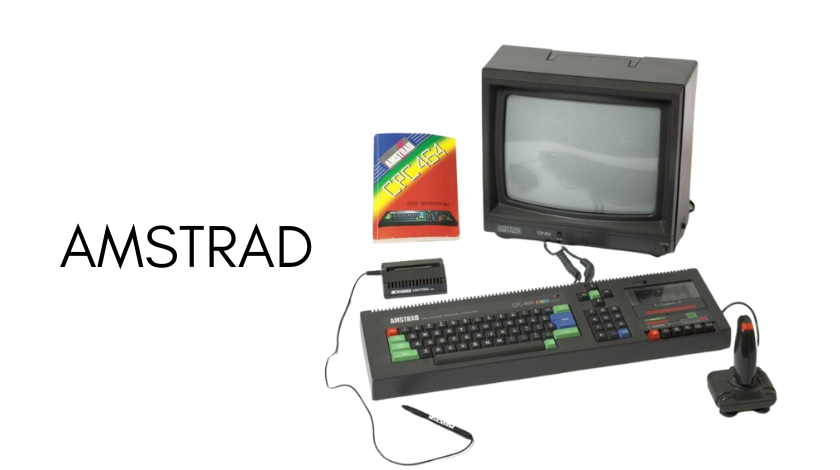
    Launched in 1984, the Amstrad CPC 464 was a masterpiece of packaging. Open the box, and you had it all. The sleek grey keyboard housed the computer itself. Plugged into it was a dedicated, crisp green-screen monitor (or a colour one if you splashed out). And built right into the side was a cassette tape deck for loading games and programs. You just needed one power cable. For parents, this was a dream—no confusing arrays of wires and incompatible gadgets. For kids, it was a magic box of endless possibility. I vividly remember unboxing a CPC 464 at a friend’s house; it felt so much more substantial and “complete” than my own jumble of computer parts. The satisfying clunk of the giant rubber keys and the distinctive chirrup as it booted into Locomotive BASIC felt like the start of an adventure.

    While the CPC was the games machine, Amstrad had another ace up its sleeve: the PCW, or Personal Computer Word-processor. Launched around the same time, this was aimed at a completely different market: small businesses, students, and writers. It came with a dedicated word-processing program, a daisy-wheel printer that produced typewriter-quality text, and again, that brilliant all-in-one design. The PCW was astoundingly successful because it solved a real problem affordably. Many a dissertation, novel, and small business letter was born on its green screen. This dual approach showed Amstrad’s breadth—they weren’t just selling toys; they were selling practical tools for work and play, all under the same trusted brand.

    Ah, but the games! This is where nostalgia hits hardest. The Amstrad CPC, with its capable sound and vibrant colour palette, became a powerhouse for 8-bit software. Titles like Chuckie Egg, with its frantic egg-collecting action, Harrier Attack, with its simple but addictive bombing runs, and Dizzy, the loveable egg-shaped adventurer, defined countless childhoods. The soundtracks, composed within severe technical limits, are still instantly recognisable. The ritual of loading a game from tape was an event in itself. You’d type RUN" and press play, then wait for five agonising minutes as the screen filled with colourful stripes and the tape deck emitted a wild, robotic screech. A failed load meant rewinding and trying again, a lesson in patience modern instant downloads have erased! This shared experience created a deep, tactile connection to the software that is hard to replicate.

    So, what happened? If Amstrad was so successful, why aren’t we buying Amstrad laptops today? The landscape shifted dramatically in the early 1990s. The era of the dedicated 8-bit home computer was ending, overtaken by more powerful and standardised IBM PC compatibles. Amstrad tried to adapt, producing its own range of PCs and even venturing into the doomed console market with the GX4000. They also made later versions of the popular ZX Spectrum, like the +2. But the magic formula of the all-in-one package became less unique as PC prices fell. The company pivoted, focusing on other consumer electronics and telecommunications, like the once-ubiquitous “emailer” phones. The home computer chapter had gracefully closed. Amstrad’s story isn’t one of failure, but of a company that brilliantly dominated a specific moment in time.

    You might think that’s the end, but Amstrad’s legacy is vibrantly alive. Hop online, and you’ll find a thriving community of collectors, programmers, and fans. Websites are dedicated to preserving every game ever released. Emulators like CPCemu allow anyone to relive those classic moments on a modern PC or even a smartphone. For the truly dedicated, original hardware is lovingly restored—replacing leaky capacitors, cleaning dusty keyboards, and getting that old monitor to glow once more. There’s a beautiful respect for this piece of history. I recently attended a retro computing fair, and the buzz around the Amstrad tables was palpable. People weren’t just buying objects; they were sharing stories, reconnecting with a part of their youth, and introducing their children to the computers they grew up with. This isn’t just nostalgia; it’s preservation.

    In the end, Amstrad represents something profoundly important: accessible technology. Sir Alan Sugar’s vision demystified computing. He took a complex, intimidating new world and packaged it in a way that felt welcoming and manageable for everyone. The Amstrad CPC and PCW weren’t the most powerful machines of their day, but they were arguably the most thoughtful. They understood the user’s fear and excitement. They bridged the gap between enthusiast curiosity and mainstream adoption. For that reason, Amstrad holds a cherished place in the history of technology. It was a truly British pioneer that, for a glorious few years, put the future within reach of millions, one all-in-one box at a time.

    Conclusion

    The story of Amstrad is a classic tale of innovation meeting market need at the perfect time. By focusing on user-friendly, complete packages, Sir Alan Sugar’s company captured the spirit of the 1980s home computing boom in a way few others could. From the game-filled halls of the CPC to the word-processing prowess of the PCW, Amstrad left an indelible mark on a generation. Its physical machines may now be relics, but its legacy—of making technology approachable, fun, and practical—resonates powerfully in today’s world. It reminds us that great tech isn’t just about raw power; it’s about understanding people and delivering what they truly need.

    Frequently Asked Questions (FAQ)

    Q: What does “Amstrad” stand for?
    A: It stands for Alan M. Sugar Trading. It was founded by the now-famous entrepreneur and TV personality Sir Alan Sugar in 1968.

    Q: What was the most popular Amstrad computer?
    A: The Amstrad CPC 464 is the iconic model most people remember. Its all-in-one design with a built-in tape deck made it a huge hit in homes across the UK and Europe.

    Q: Can I still play Amstrad games today?
    A: Absolutely! You don’t need the original hardware. Software called an “emulator,” such as CPCemu or WinAPE, can mimic the Amstrad CPC on your modern computer, allowing you to run game files (often called ROMs).

    Q: Did Amstrad make the ZX Spectrum?
    A: Not originally. The ZX Spectrum was created by Sinclair. However, after Amstrad bought Sinclair’s computer business in 1986, they produced new models like the ZX Spectrum +2 and +3, which had built-in tape decks or disk drives, continuing the “all-in-one” theme.

    Q: Is Amstrad still a company?
    A: The Amstrad brand still exists, but it is no longer the force it was in the 80s. It is now a private company owned by Sir Alan Sugar’s family and has historically been involved in licensing and various technology investments, but it does not produce consumer computers like it used to.

  • The Walkman: How a Little Blue Box Changed Music Forever

    The Walkman: How a Little Blue Box Changed Music Forever

    Let me tell you a story. A few years ago, I was cleaning out my parents’ attic, covered in dust and nostalgia, when I found a small, blue plastic case. It had a clear lid, two headphone jacks, and a worn-out label that said “Sony Walkman.” I pressed a stiff plastic button, and the cassette tray popped open with a satisfying clunk. Inside was a mixtape, its handwritten label faded. I found some batteries, plugged in an old pair of headphones, and hit play. The sound that came through was warm, a little wobbly, and filled with the gentle hiss of tape. In that moment, I wasn’t just listening to music; I was holding a piece of history in my hands. It felt personal, physical, and utterly magical. This wasn’t just a gadget. It was the device that taught the world to listen to music on the go.

    So, what exactly was the Walkman? In the simplest terms, it was the world’s first truly successful portable cassette player. Before it, if you wanted to listen to music outside your home, you were stuck with bulky “boomboxes” that blasted sound to everyone around you. The Walkman changed the rules. It was small, lightweight, and private. It came with lightweight headphones (they called them “headphones” but they were really just small speakers that rested on your ears). For the first time, you could take your personal soundtrack with you on the bus, to the park, or for a jog. It turned music from a shared experience in a room into a personal, portable bubble of sound. When Sony co-founder Masaru Ibuka requested a way to listen to opera on long flights, engineers modified a press cassette recorder into a playback-only device. That simple idea, launched in Japan on July 1, 1979, as the Sony TPS-L2, would spark a global revolution.

    The original Sony TPS-L2, that little blue and silver box I found, was a marvel of its time. It had two headphone jacks, because Sony thought people might want to share the experience (a feature quickly dropped in later models as the private nature of the device became its main appeal). It even had a special “hotline” button you could press to lower the music volume and speak to the person next to you through a tiny microphone. Can you imagine that? A social feature on the most anti-social device ever invented. It ran on two AA batteries and came with a sleek leather case. Sony’s marketing was initially unsure, predicting they might sell only 5,000 units a month. They were spectacularly wrong. The Walkman sold out almost immediately in Japan. By the time it hit the global market, it became a must-have item. It wasn’t just selling a product; it was selling an idea—the idea of personal, mobile freedom.

    The impact of the Walkman is hard to overstate. It fundamentally changed our relationship with music and the world around us. Before the Walkman, you listened to the environment—the traffic, the chatter, the world. After the Walkman, you could curate your own environment. It created what critics called the “Walkman effect,” where people walked through city streets in their own musical bubbles. It changed how we exercised, giving birth to the “jogging with music” trend. It changed fashion; those distinctive foam-padded headphones became a symbol of cool. Culturally, it defined the 1980s. You saw it in movies, from the opening scene of Guardians of the Galaxy to teens skating in countless 80s flicks. More importantly, it empowered the listener. You made mixtapes—carefully curated collections of songs recorded from the radio or other tapes. Making a mixtape for a friend or a crush was an act of love and effort. There was no algorithm suggesting songs; it was all you. The Walkman put you in the director’s chair of your life’s soundtrack.

    Of course, technology never stands still. The name “Walkman” became so powerful that Sony used it for their entire line of portable music players. When compact discs arrived, the “Discman” was born, offering skip-free (in theory, at least) digital sound. Then came the MiniDisc Walkman, a briefly glorious format that offered the durability of digital with the recordability of tape. But the biggest earthquake was the digital file. With the rise of MP3s, portable music moved from physical objects to data files. Apple’s iPod, launched in 2001, is often seen as the Walkman’s successor, storing thousands of songs in your pocket. For a while, it seemed the cassette Walkman was dead, a relic destined for attics like my parents’.

    But here’s the fascinating twist: the Walkman is back. Not in the mainstream way it once was, but in a powerful wave of nostalgia and a renewed love for analog experiences. Walkmans are popular again. You can find them on eBay, Etsy, and in trendy vintage stores. Why? I believe it’s a reaction to our fully digital lives. Streaming music is amazing—all the music in the world at your fingertips. But it can feel intangible, endless, and sometimes overwhelming. A cassette tape is finite. You listen from start to finish. You flip it over. You engage with it physically. For younger generations who grew up with streaming, the Walkman is a novel, tactile piece of tech history. For those of us who remember them, it’s a warm dose of nostalgia. The clicks, the whirrs, the hiss—it’s not just noise; it’s the sound of a different pace of life. Furthermore, Sony never actually stopped making digital Walkmans. Their high-resolution audio players, like the Sony NW-A306, carry the Walkman name proudly, catering to audiophiles who want superior sound quality beyond what a smartphone can offer. They are a direct spiritual successor, built for those who prioritize personal, passionate listening.

    Finding and using a vintage Walkman today is a joy. If you’re looking to buy one, be prepared for some maintenance. The most common issue is the perished rubber belt inside that drives the tape. Thankfully, replacement belts are widely available online, and with a small screwdriver and a YouTube tutorial, most people can fix it themselves. When you get it working, there’s a profound sense of accomplishment. You’re not just a consumer; you’re a curator and a caretaker of technology. You hunt for tapes in thrift stores or order new releases from bands who now often release music on cassette as a collector’s item. The experience is intentional. You can’t skip a song with a voice command; you have to fast-forward and guess where it starts. It forces you to listen, really listen, just like it forced everyone in 1979 to hear their world in a brand new way.

    Conclusion

    From its humble beginnings as a modified tape recorder to its status as a global cultural icon, the Walkman’s journey is a testament to how a simple idea can reshape society. It was more than a plastic box with a tape inside; it was a key that unlocked personal auditory space. It democratized music mobility and shaped the habits of a generation. While its reign as the king of portable music was eventually overtaken by digital files, its legacy is immortal. Today, its revival is a beautiful reminder that in our rush towards the future, we sometimes find value in the tangible, the deliberate, and the personal experiences of the past. The Walkman taught us to take our music with us, and in doing so, it taught us something about ourselves. It reminded us that sometimes, the most revolutionary thing you can do is create a little bubble of your own perfect sound and just press play.

    Frequently Asked Questions (FAQ)

    Q: Are original Walkmans still being made?
    A: Sony no longer manufactures cassette-based Walkmans. However, they do produce a range of high-quality digital audio players under the Walkman brand for audiophiles. The original cassette models are only available as vintage or second-hand items.

    Q: Why did the Walkman have two headphone jacks?
    A: The first model, the TPS-L2, featured two jacks because Sony initially envisioned the Walkman as a shared social experience. They quickly realized that its primary appeal was personal, private listening, and most subsequent models had only one jack.

    Q: What does “Walkman” actually mean?
    A: It’s a playful, invented name. It’s a blend of “Walk” (for portability) and “Man” (from “Pressman,” a Sony portable tape recorder for journalists). In some markets, it was initially called “Soundabout” or “Stowaway,” but “Walkman” stuck globally.

    Q: Is music still released on cassette?
    A: Yes! There has been a significant cassette revival, especially in indie, punk, and alternative music scenes. Many bands release limited-run cassettes as collectibles, and new blank tapes are also being manufactured.

    Q: What should I check when buying a vintage Walkman?
    A: First, ask if it powers on. Then, the most critical part is the belt drive. If the player makes a whirring noise but the tape doesn’t move, the belt is likely broken—a common and usually fixable issue. Also, check the condition of the headphone jack and the playback head for excessive wear.

  • Art Deco Explained: Your Friendly Guide to the 1920s Glamour Style

    Art Deco Explained: Your Friendly Guide to the 1920s Glamour Style

    Have you ever looked at a sleek, geometric skyscraper, a vintage poster with a bold sunburst, or a piece of furniture with sharp angles and rich inlaid wood and felt a sense of thrilling glamour? That feeling, that unmistakable style, is very likely Art Deco. It’s a word we throw around a lot, but what exactly is it? Let me tell you, it’s more than just a “look” from an old movie. Art Deco is a spirit. It’s the confidence of the 1920s, the optimism after a world war, and the breathtaking belief that the future was going to be fast, shiny, and spectacular. I’ve always been drawn to it. There’s a strength in its lines that feels modern even now, a century later. In this guide, I want to walk you through what makes Art Deco so special, where it came from, and most importantly, how you can understand and even bring a touch of its magic into your own life today.

    A Trip Back in Time: Where Did Art Deco Come From?

    To really “get” Art Deco, you have to imagine the world in the 1920s. The First World War was over. People, especially in places like Paris and New York, were desperate for joy, for progress, and for a break from the past. There was a new sense of wealth (for some), the jazz music was infectious, and technology was leaping forward with cars, ocean liners, and radios.

    The style officially got its big debut at a huge world’s fair in Paris in 1925, called the Exposition Internationale des Arts Décoratifs et Industriels Modernes. That’s a mouthful, but the key part is Arts Décoratifs—which is where the name “Art Deco” was later shortened from. This fair was a showcase for a new, modern style that rejected the flowing, nature-inspired curls of the earlier Art Nouveau. Instead, the designers looked to the future: to the power of machines, the geometry of ancient cultures like Egypt (spurred by the discovery of King Tut’s tomb in 1922), and the stepped forms of Aztec temples. It was a true melting pot of ideas, all filtered through a lens of sheer luxury and modern ambition.

    Spotting Art Deco: 5 Unmistakable Characteristics

    So, how do you know it’s Art Deco? Once you learn these key ingredients, you’ll start seeing it everywhere—in old cinema lobbies, on your grandmother’s vanity, in the silhouette of a classic car. Here’s what to look for:

    1. Bold Geometric Shapes: This is the heartbeat of Deco. Think zigzags, chevrons, sunbursts, trapezoids, and sweeping curves. Patterns are often symmetrical and repetitive, creating a sense of order and dynamic energy. The famous “sunburst” motif, with rays exploding from a central point, is perhaps the most iconic symbol of all.

    2. Luxurious and Contrasting Materials: Art Deco loved to play with texture. It wasn’t shy about opulence. You’ll see polished woods like ebony and macassar, shiny lacquers, gleaming chrome and stainless steel, mirrored glass, and exotic inlays of ivory, tortoiseshell, or mother-of-pearl. A classic Deco move is to place something ultra-sleek (like chrome) right next to something deeply sensual (like velvet).

    3. Streamlined, Symmetrical Forms: Whether it’s a skyscraper or a toaster, Art Deco design favors a sense of balance and a sleek, aerodynamic profile. This later evolved into “Streamline Moderne” in the 1930s, where everything looked like it was moving fast, even when standing still. Buildings often had rounded corners, and furniture had smooth, flowing lines.

    4. Strong, Stylized Typography and Imagery: The graphic design of the era is unforgettable. Posters featured bold, blocky fonts and images of idealized, athletic human figures in poses that suggested speed and grace. Think of images of dancers, runners, or goddesses holding lightning bolts. Nature was present, but it was always tamed into geometric patterns—like stylized fountains, waterfalls, or animals.

    5. Vibrant and Sophisticated Color Palettes: While black, white, chrome, and gold are the classic high-contrast combo, Art Deco also embraced deep jewel tones like emerald green, sapphire blue, ruby red, and purples, often paired with creams and beiges. It’s a palette that feels both rich and surprisingly modern.

    Concrete Dreams: The Grandeur of Art Deco Architecture

    This is where Art Deco truly showed off its ambition. Architects used this style to create buildings that felt like monuments to the modern age. The most famous example? The Chrysler Building in New York City. Just look at it! That silvery spire, made of gleaming sunburst-patterned steel, the gargoyles shaped like Chrysler hood ornaments, the lobby of rich marbles and metals—it’s a love letter to the machine age and corporate pride. Right nearby, the Empire State Building carries the same torch with its clean, stepped-back silhouette.

    But it wasn’t just in New York. From the Marine Building in Vancouver (looking like a cathedral to the sea) to the Napier city in New Zealand (rebuilt almost entirely in Deco after an earthquake), the style went global. You’d find it in movie palaces (like the Fox Theatre in Atlanta), train stations (Miami’s Union Station), and even local post offices and schools. The goal was to make everyday civic life feel grand and exciting.

    Living the Glamorous Life: Art Deco Interiors and Furniture

    Step inside an Art Deco interior, and you’re in a world of curated drama. Rooms were often designed as total works of art. Furniture was low-slung and geometric, with pieces like rounded, upholstered club chairs, console tables with mirrored legs, and large, symmetrical cabinets.

    Materials were everything. A sideboard might be made of pale bird’s-eye maple with dark walnut inlays forming a zigzag pattern. Lighting was a star player: fixtures made of frosted glass with geometric cuts, floor lamps with stacked chrome discs, and sconces that cast light in fan patterns. Mirrors were everywhere, often with edges carved into sunburst or step patterns, to multiply the light and sense of space. Accessories like sleek chrome cocktail shakers, bold geometric-patterned rugs, and sculptures of gazelles or falcons completed the look. The overall feeling was one of controlled luxury, a stage set for a sophisticated, modern life.

    Bringing Deco Home: How to Add Art Deco Flair Today

    You might think, “This sounds amazing, but I don’t live in a 1920s mansion!” I don’t either. The beauty of Art Deco is in its accents. You don’t need to do a full renovation; you can hint at it. Here’s my practical advice, based on what I’ve tried in my own home:

    • Start with a Statement Mirror: This is the easiest win. Find a mirror with a sunburst, scalloped, or geometric frame. Hang it in your entryway or above a console. It instantly becomes a focal point and adds that reflective glamour.

    • Play with Lighting: Swap out a basic lampshade for one with a black-and-white geometric pattern. Look for a table lamp with a stacked marble or brass base. The right light fixture can set an entire room’s mood.

    • Incorporate Metallic Accents: Introduce pieces in chrome, brass, or gold. A pair of candlesticks, a picture frame, or the legs of a side table. Remember the contrast—place that shiny metal against a matte, dark surface.

    • Use Textiles Strategically: Throw a velvet pillow in a jewel tone (like emerald or amethyst) onto your sofa. Look for a rug with a subtle chevron or zigzag pattern. These textures add depth and luxury without commitment.

    • Choose One Bold Piece of Art: Look for vintage travel posters or modern prints that use those strong, stylized figures and bold fonts. One large piece on a wall can channel the Deco spirit powerfully.

    The key is moderation. Let one or two Deco elements be the stars in a simpler, modern room. The contrast between contemporary clean lines and a punch of 1920s glamour is what makes it feel fresh and personal, not like a museum exhibit.

    Conclusion

    Art Deco is far more than a historical footnote. It was, and remains, a powerful expression of human optimism, a belief in progress, and a celebration of craftsmanship and geometry. It taught us that modern design could be both powerful and beautiful, both luxurious and forward-thinking. From the tips of our tallest skyscrapers to the pattern on a favorite mug, its influence is woven into the fabric of our visual world. By understanding its history and its core principles, we can appreciate the buildings we pass by every day and make thoughtful choices about the spaces we create for ourselves. It’s a style that whispers of champagne cocktails and jazz, but its foundational ideas—clarity, boldness, and harmony—speak a language that never goes out of style.

    FAQ

    Q: What is the main difference between Art Deco and Art Nouveau?
    A: This is the most common question! Art Nouveau (popular in the 1890s-1910s) is all about flowing, organic, “whiplash” curves inspired by plants and flowers. It feels romantic and natural. Art Deco (1920s-1930s) is its rebellious younger sibling: it’s all about sharp geometry, machine-age aesthetics, and bold, streamlined forms inspired by ancient cultures and modern speed.

    Q: Is Art Deco style expensive to incorporate?
    A: It can be, if you’re buying original vintage furniture or huge architectural pieces. But it doesn’t have to be. The core ideas—geometry, contrast, bold accents—can be achieved affordably. Focus on accessories like mirrors, lighting, textiles, and artwork. Many high-street stores offer Deco-inspired pieces at reasonable prices.

    Q: Is Art Deco making a comeback?
    A: In many ways, it never truly left. We see constant revivals, especially in fashion, graphic design, and hospitality (hotels and bars often use Deco for a feel of timeless glamour). Its strong graphic quality and love for luxury materials resonate with modern tastes, so it cycles back into popularity regularly.

    Q: Where are the best places in the world to see Art Deco architecture?
    A: New York City (especially Manhattan), Miami’s South Beach (with its pastel-colored “Streamline Moderne” buildings), Napier (New Zealand), Mumbai (India), and of course, Paris. Many cities have hidden Deco gems in their old cinemas, government buildings, and commercial strips.

  • The Cello: A Complete and Friendly Guide for the Curious Beginner

    The Cello: A Complete and Friendly Guide for the Curious Beginner

    Have you ever heard a cello piece and felt it right in your chest? That rich, warm, almost human voice that can sound sorrowful one moment and joyful the next? Maybe you’ve watched someone play and wondered what it would be like to draw the bow across those strings yourself. But then, perhaps, a flood of questions stopped you. Is the cello hard to learn? How much does one cost? Where on earth would you even begin?

    I remember the first time I seriously considered learning. I was an adult, busy with work, and the thought of starting such a serious-looking instrument was daunting. All I could see were the hurdles. Let me tell you, I’ve been where you are. This guide is the conversation I wish I’d had back then—honest, clear, and hopefully, a little inspiring. We’ll walk through the real challenges, the undeniable rewards, and the practical first steps of welcoming the cello into your life.

    What Exactly Is a Cello, Anyway?

    Let’s start with the basics. The cello, or by its full name, the violoncello, is a bowed string instrument. It’s a core member of the orchestra’s string section, sitting right between the violas and the double basses. But to call it just an “orchestral instrument” is a huge disservice. It’s a solo powerhouse, a beloved partner in chamber music like string quartets, and even a star in modern pop and film scores.

    Its voice is so compelling because its range is closest to the human voice—from deep, resonant lows to bright, lyrical highs. It’s played seated, with the instrument resting between your knees, its neck leaning on your left shoulder. You vibrate the strings with your left hand to change pitches (and it has no frets like a guitar, which is a point we’ll get to!), and you draw a bow across them with your right hand to create that sustained, singing sound. Or, you can pluck the strings with your fingers, a technique called pizzicato.

    The Big Question: Is the Cello Hard to Learn?

    This is the gatekeeper question for most people. My honest answer is this: yes, it presents unique challenges, but they are absolutely not insurmountable, especially with the right approach. Let’s break down the common hurdles so they don’t seem so mysterious.

    First, the physicality. The cello is large. It requires a certain amount of core strength and flexibility to hold it comfortably without slouching. Your left hand must stretch into sometimes awkward positions on the fingerboard. Your right arm needs to learn a whole new set of movements to control the bow in a straight line. The first few weeks can feel clumsy, like learning to hold a pencil all over again. But your body adapts surprisingly quickly with consistent, short practices.

    Second, the fretless fingerboard. Unlike a guitar or ukulele, the cello’s fingerboard is smooth wood. There are no metal frets to guide your fingers to the perfect note. You have to learn exactly where to place each finger by ear and muscle memory. This is perhaps the most significant initial challenge. A note even a millimeter off can sound out of tune. But here’s the secret: this is also what gives the cello its incredible expressiveness. You can slide between notes (a glissando) and make micro-adjustments that fill the music with emotion. Developing this ear is a journey, not a destination.

    Third, the initial sound. When you first start, you might produce more squeaks and scratches than golden tones. The bow is sensitive to pressure, speed, and where it contacts the string. This is normal. It’s part of the process. The day you first produce a clear, sustained note feels like a genuine victory.

    Now, let’s talk about the rewards, because they far outweigh these early struggles. The cello’s sound is instantly gratifying. Even a simple open string (a string played without fingering) resonates with a beautiful, deep tone. The learning curve, while steep at the very start, becomes incredibly logical. You build skills in a clear progression. Furthermore, the cello community is wonderfully supportive. There’s a shared understanding of the instrument’s quirks, and finding fellow learners or groups to play with can be immensely motivating.

    Your Practical First Steps: From Dreaming to Doing

    Okay, so you’re intrigued and ready to dip a toe in. What does the actual path look like?

    1. Find a Teacher, Even Just for a Few Lessons. This is my strongest piece of advice. A good teacher, even if you only see them once a month or start with a short introductory course, is invaluable. They will prevent bad habits from forming, show you how to hold the instrument without injury, and give you immediate feedback on your sound. I tried online videos alone for a month and made little progress. One in-person lesson corrected my bow hold and changed everything. Look for local music schools, community colleges, or ask for recommendations from orchestra players. Many now offer online lessons, which can be fantastic for flexibility.

    2. The Instrument Question: To Rent or to Buy? Do not, I repeat, do not go out and buy an expensive cello right away. The best path for 95% of beginners is to rent. A good rental program from a dedicated string shop (not a general music store) provides a quality, properly set-up instrument, often at a very reasonable monthly fee. The “set-up” is crucial—the bridge height, string alignment, and peg fitting. A poor set-up on a cheap instrument can make it literally unplayable and crush your enthusiasm. Many rental schemes also have a rent-to-own option, where your payments go toward a future purchase. After a year or so, you’ll know if you’re committed and what kind of sound you prefer.

    3. Embrace Smart, Consistent Practice. You do not need to practice for two hours a day. Consistency beats marathon sessions. Twenty to thirty minutes of focused practice, five days a week, will yield remarkable results. Focus on the fundamentals in the beginning: long, slow bow strokes to develop a clean sound, and simple finger placement exercises. Your teacher will guide this. Remember, it’s not about the clock; it’s about mindful repetition.

    4. Join the Community. Listen to cello music! Explore the breathtaking passion of Jacqueline du Pré in Elgar’s Cello Concerto, the sublime precision of Yo-Yo Ma playing almost anything, or the innovative work of artists like 2Cellos. Go watch a local orchestra or a chamber music concert. Hearing the instrument played live is a magical boost. Online forums and social media groups are full of supportive beginners and experienced players willing to offer tips.

    The Journey is the Point

    Learning the cello is not a race. It’s a slow, deepening relationship with an instrument that has a soul. Some days will be frustrating. You’ll feel like your fingers are made of wood and your bow arm has a mind of its own. But then, there will be a moment—when you finally nail that tricky shift, when you play a short phrase and it actually sounds like music, when you feel the vibration of a low C note through your body—that makes every squeak worth it.

    It teaches patience, mindfulness, and the profound joy of creating something beautiful with your own hands. It’s not just about learning an instrument; it’s about giving yourself a new voice.

    So, if that deep, singing sound calls to you, I encourage you to take the first step. Find a teacher for a trial lesson. Rent a cello for a month. See how it feels. The world could always use more cellists, and your musical journey, however it unfolds, is a worthy one.

    Conclusion

    Starting the cello is a decision to embrace a beautiful challenge. While its initial learning curve involves physical coordination and training your ear on a fretless fingerboard, the journey is structured, deeply rewarding, and supported by a wonderful community. By beginning with a teacher, opting to rent a properly set-up instrument, and committing to short, consistent practice, you can successfully navigate the early hurdles. The cello’s uniquely human and resonant voice offers a lifetime of musical exploration, making every step of the effort profoundly worthwhile.

    FAQ (Frequently Asked Questions)

    1. How much does a beginner cello cost?
    A decent, playable beginner cello outfit (including cello, bow, and case) typically starts between $800 and $2,000 if buying. However, rental is strongly recommended, with monthly fees usually ranging from $30 to $80. This gives you access to a better-quality instrument without the large upfront cost.

    2. Is the cello harder to learn than the violin?
    Both present challenges. The cello is larger and uses different physical motions. The violin is smaller but requires more precise, often uncomfortable, arm positioning to play in tune. Many find the cello’s posture more natural and its deeper initial sound more satisfying. “Harder” is subjective and depends on the individual.

    3. Can I learn cello as an adult?
    Absolutely! Adults often make excellent students because they are self-motivated and understand the value of structured practice. Progress might differ from a child’s, but the ability to learn and enjoy music is ageless.

    4. How do you tune a cello?
    Standard cello tuning from high to low is A, D, G, C. Beginners usually use a digital tuner or a tuning app. You turn the pegs at the scroll for large adjustments and the fine tuners on the tailpiece for small adjustments. It’s a skill that takes practice, and your teacher will show you how.

    5. What are some famous cello pieces for beginners to listen to?

    • Bach’s Cello Suites (especially Suite No. 1, Prelude): The cornerstone of cello literature.

    • Saint-Saëns: “The Swan” from The Carnival of the Animals: A beautiful, lyrical melody.

    • Schubert: “Arpeggione” Sonata: Full of gorgeous themes.

    • Any recording by Yo-Yo Ma, Mstislav Rostropovich, or Jacqueline du Pré to hear the instrument’s emotional range.