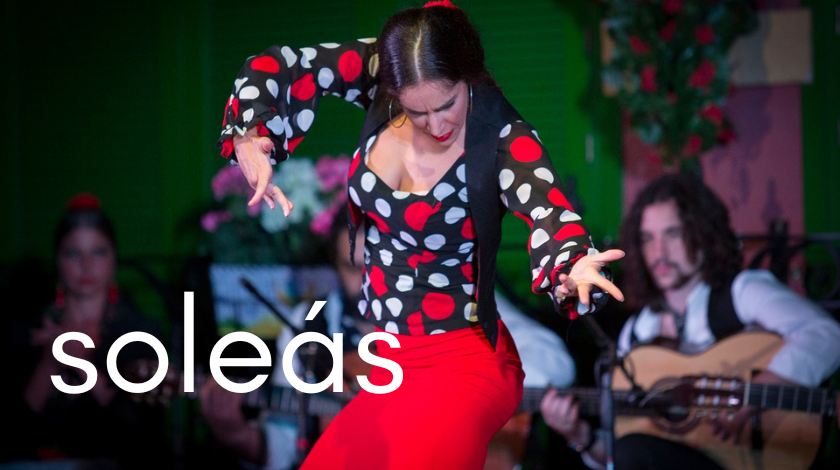
I remember the first time a soleá truly stopped me in my tracks. It wasn’t in a grand theatre, but in a small, smoky peña in Seville. The chatter faded, and a singer, a woman with a face etched with lines that spoke of life lived deeply, took a breath that seemed to pull the air from the room. What followed wasn’t just a song; it was a raw, unfiltered eruption of emotion. It was sorrow, but not despair. It was pride, resilience, and a profound beauty that ached. I didn’t understand the Andalusian Spanish lyrics then, but I felt their meaning in my bones. That is the power of soleá. It doesn’t just speak to you; it bypasses the intellect and speaks directly to the soul. If you’ve ever been curious about flamenco’s deep heart, let me guide you into the world of soleá, the style many consider to be its very foundation.
What is Soleá? The Soul of Flamenco
Let’s start simply. Soleá (pronounced so-leh-AH, and often called Soleares in its plural form) is not just a song or a dance. It is one of the most important fundamental forms, or palos, of flamenco. Think of flamenco as a vast, intricate language. If that language had a core dialect, a way of speaking that held its most essential grammar and vocabulary, that would be soleá. It is often categorized under Cante Jondo or “deep song,” which refers to the most serious, profound, and emotionally weighty styles of flamenco.
The word itself is believed to come from soledad, the Spanish word for “solitude” or “loneliness.” And that gives you the first clue to its character. Soleá is an exploration of deep, often melancholic themes. But calling it simply “sad” is a massive oversimplification. It is a complex portrait of the human condition. It expresses loneliness, yes, but also longing, loss, existential reflection, stoic endurance, and even a defiant joy in survival. It is the sound of looking into the abyss, then turning that gaze into something breathtakingly beautiful.
The Deep Roots: History and Origin of Soleá
Pinpointing the exact birth of any folk art is tricky, but most historians agree that soleá crystallized as a distinct form in the 19th century in the region of Andalusia in southern Spain. Its roots are a beautiful, tangled tree growing from many seeds. It draws from the older, more rhythmic cañas and polos, and it carries within it echoes of the rich cultural mosaic of Andalusia. You can hear influences from ancient Andalusian folk songs, Sephardic Jewish laments, and even the Moorish call to prayer in its melodic contours. It’s believed to have emerged strongly in the Triana district of Seville, Jerez de la Frontera, and Cádiz.
It was in the cafés cantantes (singing cafes) of the 1800s that soleá began to take its modern shape, moving from a largely private, family-based expression to a more formalized art on stage. This period saw the rise of legendary singers, or cantaores, who defined the style. Their names, like El Fillo, La Andonda, and later, the monumental Tomás “El Nitri,” are whispered with reverence. They were the architects of the soleá we recognize today.
The Architecture of Emotion: Soleá Compás Explained
This is where many beginners get intimidated, but stay with me. The magic of soleá is held within its rhythmic structure, called the compás. Every flamenco style has its own unique compás, a recurring cycle of accents that is the heartbeat of the performance. Soleá’s compás is a 12-beat cycle, but it’s not counted like a waltz (1-2-3). The accents fall in a very specific, syncopated pattern that gives it its distinctive swaying, yet driving, feel.
Here’s the simplest way I learned to feel it, not just count it. Tap your hand on a table in a steady pulse:
1 – 2 – [3] – 4 – 5 – [6] – [7] – 8 – [9] – 10 – [11] – 12.
The beats in brackets ([3], [6], [8], [10], [12]) are where the strong accents typically fall, especially beats 3, 6, 8, 10, and 12. Beat 12 is a particularly strong downbeat, like a sigh or a punctuation mark. The guitar builds tension and release around this cycle, the singer phrases across it, and the dancer’s footwork (zapateado) creates breathtaking percussive dialogues with it. Understanding this compás is the key to unlocking why soleá feels the way it does. It’s not a straight line; it’s a spiraling, emotional journey that comes back to its start, ready to build again.
More Than Just Music: The Three Forms of Soleá
Soleá is a trinity. It exists in three interconnected forms: singing (cante), guitar (toque), and dance (baile). You can have a performance with just one, but they are most powerful when in conversation.
Cante: The Voice of Soleá
The singing is the undisputed center. A cantaor or cantaora singing soleá is undertaking a monumental task. The voice is often raw, gritty, and strained, not for lack of technique, but as an aesthetic choice to convey depth. Melodies weave around the guitar, often starting with a long, drawn-out “Ay…” that sets the emotional tone. The lyrics are poetic, symbolic, and deeply personal. They might speak of a mother’s pain, a lover’s betrayal, or philosophical questions about life and death. The singer must not only have vocal power but also a profound understanding of duende—that elusive spirit of emotional authenticity that gives you chills.
Toque: The Guitar of Soleá
The flamenco guitarist provides the harmonic and rhythmic foundation. Soleá is traditionally played in the Phrygian mode (centered around E, with frequent use of F natural), giving it that instantly recognizable “Spanish” sound that feels both ancient and haunting. The guitarist plays the compás, but also improvises melodic passages called falsetas between the singer’s lines. These falsetas are not just pretty tunes; they are emotional commentaries, answering the singer’s cry or setting up the next verse. Great soleá guitarists like Paco de Lucía, Manolo Sanlúcar, and Niño Ricardo didn’t just play notes; they painted soundscapes of darkness and light.
Baile: The Dance of Soleá
The dance of soleá is considered one of the most serious and majestic forms for a female dancer (bailaora). It is not flashy or frantic. It is an internalized, powerful expression. The posture is proud, the arms move with a sculptural grace, and the focus is often inward. The footwork is complex and percussive, but it serves the emotion, not just showcases skill. A soleá dance is a study in controlled power and deep dignity. It’s a visual representation of bearing a great weight with grace.
Feeling the Soleá: Common Themes and Lyrics
To listen to soleá is to step into a world of poetic imagery. The lyrics are rarely literal narratives. They use metaphor, nature, and religious allusion. You’ll hear about the “dark wells of the eyes,” the “bitter lemon” of fate, pleas to the Virgin Mary, and reflections on the “black horses” of time. A classic example, often attributed to singer Antonio Chacón, translates roughly to: “My heart is a dark well / Deep and cold, what a pity / Where all the sorrows of the world / Have come to fall.” It’s not a cheerful sentiment, but when sung with conviction, it becomes a shared catharsis, a beautiful acknowledgment of universal pain.
How to Start Listening to Soleá: Key Artists and Recordings
Don’t start with a dusty, archival recording from 1920. Ease your way in. For a masterclass in modern cante, find the album “La Leyenda del Tiempo” by Camarón de la Isla, which revolutionized flamenco but is rooted in forms like soleá. For pure, traditional power, listen to Enrique Morente, especially his earlier work. For guitar, Paco de Lucía’s album “Fuente y Caudal” has incredible soleá guitar work. For dance, watch videos of Carmen Amaya (a historic figure of fierce power) or contemporary masters like Eva La Yerbabuena, whose soleá is a masterclass in subtle intensity.
Soleá vs. Other Palos: Finding Its Family
Soleá is the matriarch of a whole family of styles. Its closest relative is Seguiriya, which is even darker and more austere, with a different 12-beat compás (accents on 1, 3, 5, 8, and 11). Alegrías is like its sunnier cousin; it shares the same 12-beat rhythmic structure but is faster, in a major key, and full of festive energy. Think of Soleá as the deep, introspective night and Alegrías as the bright, celebratory morning that follows. Other palos like Bulerías evolved from Soleá, taking that compás and speeding it up into a frenetic, playful, and complex frenzy.
Conclusion
Soleá is not entertainment in the casual sense. It is an offering, a ritual of shared humanity. It asks for your attention and your emotional investment. In a world that often feels shallow and fast, sitting with a soleá is a radical act of slowing down and listening to the depths. It teaches us that pain, when transformed through art, can be the source of immense beauty and connection. You don’t need to be from Andalusia to understand it. You just need to have lived, to have felt joy and sorrow. The next time you search for music that has weight, that has history and soul, seek out a soleá. Let that first, mournful “Ay…” wash over you. You might just find, as I did, that it speaks a language your heart has always known.
FAQ Section
Q: How do you pronounce “Soleá”?
A: It’s pronounced so-leh-AH. The accent on the final ‘á’ means you put the stress on that last syllable.
Q: Is Soleá always sad?
A: While its primary emotional landscape is profound and often melancholic, it’s more accurate to call it deeply emotional. It conveys dignity, resilience, and catharsis, which can be powerfully uplifting to experience.
Q: Can men dance Soleá?
A: Traditionally, soleá is most commonly associated with female dancers due to its particular aesthetic of internalized power and grace. However, men certainly do dance it, bringing a different but equally valid interpretation of strength and composure. Flamenco is increasingly breaking from strict gender roles.
Q: What is the best way for a beginner to learn the Soleá compás?
A: Start by listening! Find a simple soleá guitar recording and just try to clap on beats 3, 6, 8, 10, and 12. Don’t worry about getting it perfect at first. The goal is to internalize the feel of that lopsided, swaying rhythm. There are also many excellent slow-tempo tutorials on YouTube.
Q: Who is considered the greatest Soleá singer of all time?
A: This is highly debated among aficionados, which is part of the fun! Historical names like Tomás “El Nitri” and Antonio Chacón are foundational. In the 20th century, Antonio Mairena is a colossal figure who dedicated his life to preserving and systematizing “deep song” like soleá. More recently, Enrique Morente and Camarón de la Isla are revered as revolutionary geniuses who carried the form into the modern era.