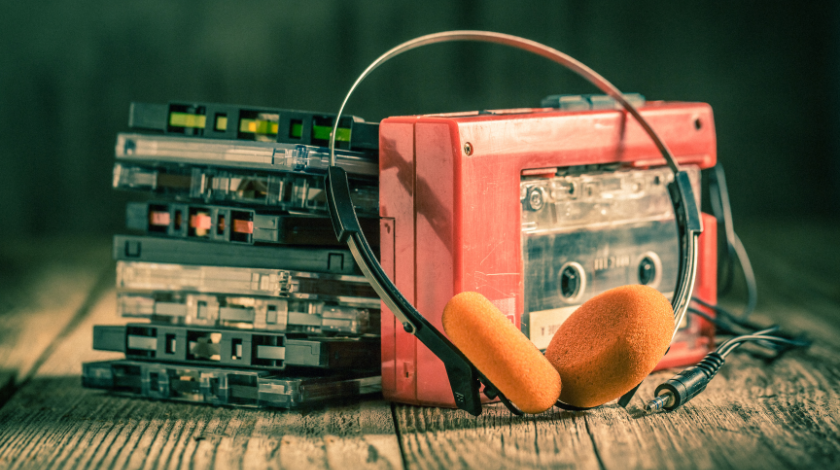
Let me tell you a story. A few years ago, I was cleaning out my parents’ attic, covered in dust and nostalgia, when I found a small, blue plastic case. It had a clear lid, two headphone jacks, and a worn-out label that said “Sony Walkman.” I pressed a stiff plastic button, and the cassette tray popped open with a satisfying clunk. Inside was a mixtape, its handwritten label faded. I found some batteries, plugged in an old pair of headphones, and hit play. The sound that came through was warm, a little wobbly, and filled with the gentle hiss of tape. In that moment, I wasn’t just listening to music; I was holding a piece of history in my hands. It felt personal, physical, and utterly magical. This wasn’t just a gadget. It was the device that taught the world to listen to music on the go.
So, what exactly was the Walkman? In the simplest terms, it was the world’s first truly successful portable cassette player. Before it, if you wanted to listen to music outside your home, you were stuck with bulky “boomboxes” that blasted sound to everyone around you. The Walkman changed the rules. It was small, lightweight, and private. It came with lightweight headphones (they called them “headphones” but they were really just small speakers that rested on your ears). For the first time, you could take your personal soundtrack with you on the bus, to the park, or for a jog. It turned music from a shared experience in a room into a personal, portable bubble of sound. When Sony co-founder Masaru Ibuka requested a way to listen to opera on long flights, engineers modified a press cassette recorder into a playback-only device. That simple idea, launched in Japan on July 1, 1979, as the Sony TPS-L2, would spark a global revolution.
The original Sony TPS-L2, that little blue and silver box I found, was a marvel of its time. It had two headphone jacks, because Sony thought people might want to share the experience (a feature quickly dropped in later models as the private nature of the device became its main appeal). It even had a special “hotline” button you could press to lower the music volume and speak to the person next to you through a tiny microphone. Can you imagine that? A social feature on the most anti-social device ever invented. It ran on two AA batteries and came with a sleek leather case. Sony’s marketing was initially unsure, predicting they might sell only 5,000 units a month. They were spectacularly wrong. The Walkman sold out almost immediately in Japan. By the time it hit the global market, it became a must-have item. It wasn’t just selling a product; it was selling an idea—the idea of personal, mobile freedom.
The impact of the Walkman is hard to overstate. It fundamentally changed our relationship with music and the world around us. Before the Walkman, you listened to the environment—the traffic, the chatter, the world. After the Walkman, you could curate your own environment. It created what critics called the “Walkman effect,” where people walked through city streets in their own musical bubbles. It changed how we exercised, giving birth to the “jogging with music” trend. It changed fashion; those distinctive foam-padded headphones became a symbol of cool. Culturally, it defined the 1980s. You saw it in movies, from the opening scene of Guardians of the Galaxy to teens skating in countless 80s flicks. More importantly, it empowered the listener. You made mixtapes—carefully curated collections of songs recorded from the radio or other tapes. Making a mixtape for a friend or a crush was an act of love and effort. There was no algorithm suggesting songs; it was all you. The Walkman put you in the director’s chair of your life’s soundtrack.
Of course, technology never stands still. The name “Walkman” became so powerful that Sony used it for their entire line of portable music players. When compact discs arrived, the “Discman” was born, offering skip-free (in theory, at least) digital sound. Then came the MiniDisc Walkman, a briefly glorious format that offered the durability of digital with the recordability of tape. But the biggest earthquake was the digital file. With the rise of MP3s, portable music moved from physical objects to data files. Apple’s iPod, launched in 2001, is often seen as the Walkman’s successor, storing thousands of songs in your pocket. For a while, it seemed the cassette Walkman was dead, a relic destined for attics like my parents’.
But here’s the fascinating twist: the Walkman is back. Not in the mainstream way it once was, but in a powerful wave of nostalgia and a renewed love for analog experiences. Walkmans are popular again. You can find them on eBay, Etsy, and in trendy vintage stores. Why? I believe it’s a reaction to our fully digital lives. Streaming music is amazing—all the music in the world at your fingertips. But it can feel intangible, endless, and sometimes overwhelming. A cassette tape is finite. You listen from start to finish. You flip it over. You engage with it physically. For younger generations who grew up with streaming, the Walkman is a novel, tactile piece of tech history. For those of us who remember them, it’s a warm dose of nostalgia. The clicks, the whirrs, the hiss—it’s not just noise; it’s the sound of a different pace of life. Furthermore, Sony never actually stopped making digital Walkmans. Their high-resolution audio players, like the Sony NW-A306, carry the Walkman name proudly, catering to audiophiles who want superior sound quality beyond what a smartphone can offer. They are a direct spiritual successor, built for those who prioritize personal, passionate listening.
Finding and using a vintage Walkman today is a joy. If you’re looking to buy one, be prepared for some maintenance. The most common issue is the perished rubber belt inside that drives the tape. Thankfully, replacement belts are widely available online, and with a small screwdriver and a YouTube tutorial, most people can fix it themselves. When you get it working, there’s a profound sense of accomplishment. You’re not just a consumer; you’re a curator and a caretaker of technology. You hunt for tapes in thrift stores or order new releases from bands who now often release music on cassette as a collector’s item. The experience is intentional. You can’t skip a song with a voice command; you have to fast-forward and guess where it starts. It forces you to listen, really listen, just like it forced everyone in 1979 to hear their world in a brand new way.
Conclusion
From its humble beginnings as a modified tape recorder to its status as a global cultural icon, the Walkman’s journey is a testament to how a simple idea can reshape society. It was more than a plastic box with a tape inside; it was a key that unlocked personal auditory space. It democratized music mobility and shaped the habits of a generation. While its reign as the king of portable music was eventually overtaken by digital files, its legacy is immortal. Today, its revival is a beautiful reminder that in our rush towards the future, we sometimes find value in the tangible, the deliberate, and the personal experiences of the past. The Walkman taught us to take our music with us, and in doing so, it taught us something about ourselves. It reminded us that sometimes, the most revolutionary thing you can do is create a little bubble of your own perfect sound and just press play.
Frequently Asked Questions (FAQ)
Q: Are original Walkmans still being made?
A: Sony no longer manufactures cassette-based Walkmans. However, they do produce a range of high-quality digital audio players under the Walkman brand for audiophiles. The original cassette models are only available as vintage or second-hand items.
Q: Why did the Walkman have two headphone jacks?
A: The first model, the TPS-L2, featured two jacks because Sony initially envisioned the Walkman as a shared social experience. They quickly realized that its primary appeal was personal, private listening, and most subsequent models had only one jack.
Q: What does “Walkman” actually mean?
A: It’s a playful, invented name. It’s a blend of “Walk” (for portability) and “Man” (from “Pressman,” a Sony portable tape recorder for journalists). In some markets, it was initially called “Soundabout” or “Stowaway,” but “Walkman” stuck globally.
Q: Is music still released on cassette?
A: Yes! There has been a significant cassette revival, especially in indie, punk, and alternative music scenes. Many bands release limited-run cassettes as collectibles, and new blank tapes are also being manufactured.
Q: What should I check when buying a vintage Walkman?
A: First, ask if it powers on. Then, the most critical part is the belt drive. If the player makes a whirring noise but the tape doesn’t move, the belt is likely broken—a common and usually fixable issue. Also, check the condition of the headphone jack and the playback head for excessive wear.