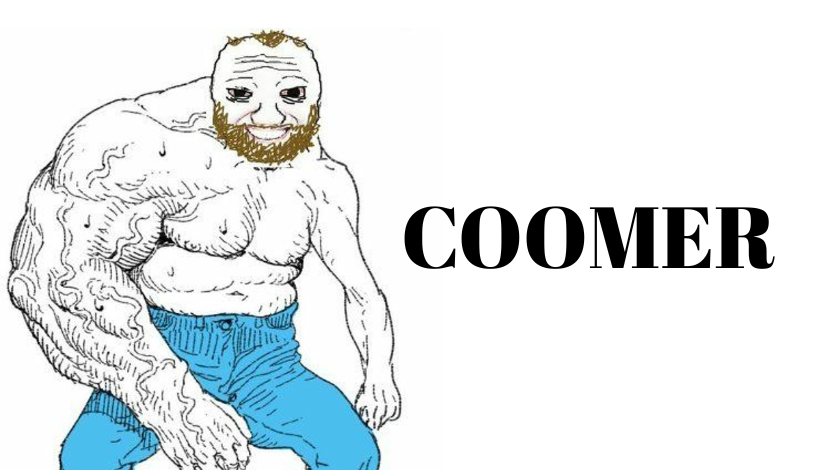
I remember the first time I scrolled past the “Coomer” meme. It was on some niche corner of the internet, a crude, simple cartoon of a disheveled man with wild eyes and a specific, unsettling grin. The caption was mocking, the comments were a mix of laughter and disgust. I kept scrolling, but the image stuck with me. It wasn’t funny in a ha-ha way. It felt sad, a bit too real, and it pointed at something much bigger than just an inside joke.
That’s the thing about internet culture. It creates these shorthand terms—like “coomer”—that explode in certain communities, carrying layers of meaning, judgment, and sometimes, a painful grain of truth. If you’ve heard the word and wondered what it genuinely means, or if it uncomfortably echoes something in your own life or someone you know, you’re in the right place. Let’s talk about this, not with mockery, but with clarity and understanding.
What Exactly is a “Coomer”? Breaking Down the Meaning
Let’s start with the basics. The term “coomer” is internet slang that originated from anonymous boards like 4chan. It’s a derogatory label for a person, stereotypically a man, depicted as being completely consumed by compulsive pornography use and self-gratification. The name itself is a crude play on the word “consumer,” but specifically a consumer of adult content.
The visual symbol of the coomer is a specific “wojak” meme—a sad-feeling cartoon character with exaggerated features: sunken eyes, pale skin, a receding hairline, and that vacant, obsessive expression. He’s often shown in a messy room, glued to a screen, representing a state of physical and social decay driven by his habits.
It’s crucial to understand that the meme is designed to be extreme and mocking. It’s used to shame, to ridicule, and to create an “other” that people can laugh at. But like many caricatures, it’s an exaggeration of something that exists. Beneath the pixels and the ridicule, the coomer archetype points directly at the very real, and very challenging, issue of compulsive sexual behavior and porn addiction in the digital age.
Beyond the Laughter: What the Meme Is Really Pointing At
Why did this meme resonate enough to spread? Because it captures a modern anxiety. We live in an era of unprecedented access. Anything you want to see, hear, or experience is a few clicks away. This is wonderful for learning and connection, but it presents a profound challenge for our brain’s reward system, especially when it comes to sexual content.
The “coomer” lifestyle, stripped of its cartoonish mockery, reflects a pattern. It’s a cycle where someone uses adult content not for occasional entertainment, but as a primary coping mechanism for stress, loneliness, boredom, or anxiety. The brain releases dopamine—the “feel-good” chemical—during this activity. Over time, it can rewires itself to seek this easy, high-dose hit of dopamine, preferring it over the more complex rewards of real human connection, hobbies, or achievement.
This isn’t about morality in a traditional sense. It’s about neurology and mental health. The person might start to:
-
Neglect responsibilities at work, school, or home.
-
Withdraw from friends and family, preferring isolation.
-
Experience a diminished interest in real-world intimacy.
-
Feel unable to stop, despite wanting to or seeing negative consequences.
-
Use it to numb difficult emotions rather than face them.
This is where the meme stops being funny. The messy room isn’t just laziness; it’s a symptom of depression and neglect. The tired eyes aren’t just from late nights; they’re from a lack of restorative sleep and genuine joy. The coomer wojak isn’t a monster; he’s a portrait of someone stuck in a compulsive loop, and our culture often doesn’t know whether to laugh at him or help him.
If This Hits Close to Home: You Are Not a Caricature
Maybe you’re reading this and feeling a pang of recognition. Let me be absolutely clear: you are not the wojak. The meme is a reduction, a cruel joke. You are a complex human being. Recognizing a problem behavior is the first and bravest step toward change. It takes immense self-awareness to even entertain the thought.
I’ve had periods in my own life—during times of high stress or transition—where my screen time skyrocketed and healthy habits fell by the wayside. It wasn’t exactly the “coomer” pattern, but it was the same principle: using digital easy buttons to soothe discomfort. The feeling afterwards was never fulfillment; it was just a dull emptiness, time lost I couldn’t get back. That feeling, that quiet regret, is your internal compass trying to point you back north.
Changing a deep-seated habit is not about willpower alone. It’s about systems and self-compassion. Beating yourself up simply uses the same neural pathways of stress that lead to the craving in the first place. Instead, think of it as a gentle redesign of your daily life.
Start with curiosity, not judgment. Ask yourself: “When do I feel the strongest urge? Is it when I’m bored at 11 PM? Is it when I’m stressed from work? Is it when I feel lonely?” Identify the trigger. Then, engineer the obstacle. Use website blockers. Charge your phone outside the bedroom. For that specific trigger time, have a pre-planned alternative: a book you’re into, a quick set of push-ups, a walk around the block, or even a dumb mobile game that’s not connected to a browser.
Finding Better Communities: From Isolation to Connection
One of the saddest aspects of the coomer stereotype is the profound isolation. A key part of breaking any cycle is connection. The internet, which can be the source of the problem, can also be part of the solution—but you must choose your corners wisely.
Avoid communities that are purely built on shame or hatred of the self or others. They often keep you locked in the same emotional state. Instead, look for spaces focused on building new things. This could be the NoFap or porn-free subreddits (focusing on the positive daily check-ins, not just the struggles), a forum for a hobby you’ve always wanted to try, a local climbing gym, a volunteer group, or a book club.
The goal is to rebuild your identity around what you do and create, not just what you resist. You are not a “former coomer.” You are someone who codes, who hikes, who cooks amazing pasta, who is a good listener, who is learning the guitar. Fill your life with actions you can be proud of, and the old habits will have less and less space to exist.
Conclusion
The “coomer” meme is a cultural artifact, a distorted mirror held up to a very real challenge of the digital era. While it’s often wielded as a weapon of mockery, we can choose to look past the ridicule and see the human struggle it represents. Compulsive behavior, isolation, and lost potential are not jokes. They are signposts pointing toward a need for help, understanding, and change.
Recovery is not a straight line. It’s a series of choices, each one a brick in a new path. It begins with the simple, courageous act of naming the problem without shame, and continues with the daily, gentle work of choosing something different. You have more strength and capacity for change than any meme could ever capture. Your story is not a cartoon; it’s being written by you, one conscious choice at a time.
Frequently Asked Questions (FAQ)
Q1: Is being a “coomer” the same as having a porn addiction?
A: The term “coomer” is an informal, mocking internet label, while “porn addiction” or “compulsive sexual behavior disorder” are terms used in psychological and therapeutic contexts. The meme exaggerates traits associated with these real issues. If your consumption feels out of control, is causing distress, or is harming your life, it’s more productive to focus on the professional terminology and seek understanding from that angle.
Q2: Where did the Coomer meme come from?
A: It originated on anonymous online forums like 4chan around 2018-2019. It evolved from earlier “wojak” memes and was specifically created to mock a perceived lifestyle of extreme online consumption and degeneracy. Its spread is a classic example of how online subcultures create and propagate symbols.
Q3: Is the meme harmful or helpful?
A: It’s complex. For some, it might serve as a crude wake-up call. However, its primary tone is one of shame and ridicule, which is rarely an effective motivator for positive, lasting change. It can deepen feelings of isolation and self-hatred in someone already struggling. A more compassionate, health-focused conversation is generally more helpful.
Q4: What are the first steps to take if I identify with this?
A: First, practice self-compassion. Acknowledge the issue without globalizing it (“I have a problematic habit” vs. “I am a terrible person”). Next, try to understand your triggers. Then, implement practical barriers (like site blockers) and introduce positive substitutions (exercise, a hobby). Consider speaking to a therapist who specializes in behavioral addictions. You don’t have to do it alone.
Q5: Are there any good resources for support?
A: Yes. Look for communities that emphasize support over shame. Subreddits like r/pornfree often focus on positive recovery. Websites like Fight the New Drug provide educational resources. The most effective resource for many is a qualified mental health professional who can offer personalized guidance in a confidential setting.