Author:

  • Effortless Mental health Teaching at home

    Demanding exercises such running otherwise exercise are great inside day but could leave you feeling productive and you will not able to sleep march 3 if they are complete too-late at night. A better feeling and you can loss of anxiety and stress (as a result of exercise) suggest your’re likely to sneak of soundly in the evening instead of sleeping awake. However, even as little since the a good 29-minute go may bring a good raft away from other advantageous assets to your own psychological state, many of which you will possibly not has felt before.

    How to Deal with Layoff Stress inside Calgary Whenever Work Feels Unpredictable

    This involves engaging in brief bouts away from physical exercise from the time. For example, in the event the fret avoidance is the purpose, utilize leisure-centered knowledge including pilates otherwise tai chi. The initial step relates to expertise your current both mental and physical state, maybe consulting with a medical professional if you have pre-established conditions. Exercise’s effect on mental health is grounded on the affect your head’s chemistry and you will structure. Inside the conditions including stress and you may ADHD, exercise can raise the power of drugs and medication from the boosting full feeling and you may focus.

    And then make get it done section of your daily life

    • “The nervous system demands us to generate decisions that are awesome updated within the to help you in fact get the advantage of leisure and you can be concerned save.”
    • Despair, in particular, decrease our very own motivation and effort.
    • It indicates you can get an everyday dosage of these end up being-an excellent hormones we generate when we have been active, to help keep your mood brought up for longer.
    • Because it makes you end up being trapped, aggravated otherwise slices in the attention, this can improve worries about your own actual and you will emotional wellness.

    Dr. Ignatov says you to definitely planning an alternative meal or experimenting regarding the kitchen area is yet another great mental health interest one acts as a “enjoyable, satisfying distraction.” Of the many psychological state issues professionals necessary so you can you, the most famous see are journaling. “When it is non-judgmental in today’s time, somebody can be boost their psychological controls and reduce rumination.” “Of a medical position, mindfulness-based treatments has lots of evidence to support the capabilities in the reducing symptoms of anxiety and you may depression,” Dr. Singh states. Obviously, the newest mental health items that actually work right for you would be distinct from the brand new mind-care methods that actually work for other individuals. After you focus on your own mental health, it does has an optimistic bubble influence on all facets from yourself, therefore’ll often be capable show up since your finest thinking on your own and people surrounding you.”

  • Где искать детальные пинко казино отзывы от экспертов

    Где искать детальные пинко казино отзывы от экспертов

    Пинко казино – это один из самых популярных видов азартных игр, и, как следствие, отзывы о них, особенно от экспертов, становятся важным источником информации для игроков. Чтобы найти детальные и всесторонние отзывы, нужно знать, где искать. В данной статье мы рассмотрим несколько надежных источников, которые помогут вам получить полное представление о пинко казино, а также узнаем, чьи мнения можно считать экспертными.

    Что такое пинко казино?

    Пинко казино – это разновидность азартных игр, которая становится все более популярной среди игроков. В отличие от традиционных казино, пинко казино предлагает уникальный подход к игровому процессу, где игроки могут не только делать ставки, но и участвовать в автоматических играх с различными уровнями сложности. Основной акцент делается на взаимодействии игроков и динамичности игр, что привлекает молодую аудиторию.

    Где искать отзывы от экспертов?

    Имеется множество платформ, где можно найти мнения экспертов касаемо пинко казино. Рассмотрим несколько самых надежных источников:

    1. Специализированные форумы и сообщества, посвящённые азартным играм, где часто обсуждаются игры и стратегии.
    2. Социальные сети, особенно такие как Twitter и LinkedIn, где эксперты делятся своим мнением.
    3. Геймерские блоги и сайты, где профессиональные игроки пишут о своем опыте.
    4. Аппликации и платформы, позволяющие игрокам оставлять отзывы с оценками.

    Например, вы можете ознакомиться с мнением известного эксперта в области азартных игр, историка азартных игр Дэвида Шварца, который делится своими наблюдениями и исследованиями на своем Twitter.

    Чем отличаются мнения экспертов от обычных отзывов?

    Мнения экспертов отличаются от обычных отзывов тем, что они основаны на глубоком анализе и исследовании рынка. Эксперты обычно изучают различные аспекты игр, такие как:

    • Качество игрового процесса
    • Бонусные предложения и программы лояльности
    • Уровень обслуживания клиентов
    • Легальность и регуляция в различных юрисдикциях

    Благодаря этим аспектам, мнения экспертов могут быть более объективными и информативными, чем отзывы обычных игроков. Кроме того, важно учитывать, что эксперты часто имеют доступ к инсайдерской информации и аналитике, что позволяет им делать более точные выводы.

    Статьи от надежных источников

    Важно также следить за актуальными статьями и репортажами о пинко казино. Например, вы можете ознакомиться с статьей Рейтер о технологиях в азартных играх, чтобы лучше понять, как инновации влияют на опыт игроков в пинко казино. Такой подход поможет вам сделать более обоснованный выбор.

    Заключение

    В поисках детальных отзывов о пинко казино от экспертов, важно обратить внимание на авторитетные источники, такие как форумы, социальные сети и специальные статьи. Не забывайте, что мнение профессионалов может значительно помочь в формировании вашего мнения об игре. Используйте доступные ресурсы, чтобы сделать осознанный выбор и наслаждаться азартными играми в надежном и безопасном окружении Пинко казино.

    Часто задаваемые вопросы

    1. Почему важно читать отзывы экспертов о пинко казино?

    Отзывы экспертов основаны на детальном анализе, что позволяет получить более полное представление о качестве и возможностях казино.

    2. Где можно найти участники обсуждения пинко казино?

    Форумы и платформы для обсуждений азартных игр – отличное место для получения мнений игроков и экспертов.

    3. Как отличить качественные отзывы от некачественных?

    Следует обращать внимание на уровень аргументации, подробности и опыт автора в азартной сфере.

    4. Имеет ли значение лицензия казино при прочтении отзывов?

    Да, лицензия напрямую влияет на безопасность и надежность казино, что стоит учитывать в отзывах.

    5. Как квалифицируются эксперты в области азартных игр?

    Эксперты могут быть исследователями, журналистами или опытными игроками, изучающими данную область на профессиональном уровне.

  • Coronavirus disease 2019

    Coronavirus disease 2019

    COVID-19 is a contagious disease caused by the coronavirus SARS-CoV-2. In January 2020, the disease spread worldwide, resulting in the COVID-19 pandemic.

    The symptoms of COVID‑19 can vary but often include fever,[7] fatigue, cough, breathing difficulties, loss of smell, and loss of taste.[8][9][10] Symptoms may begin one to fourteen days after exposure to the virus. At least a third of people who are infected do not develop noticeable symptoms.[11][12] Of those who develop symptoms noticeable enough to be classified as patients, most (81%) develop mild to moderate symptoms (up to mild pneumonia), while 14% develop severe symptoms (dyspnea, hypoxia, or more than 50% lung involvement on imaging), and 5% develop critical symptoms (respiratory failure, shock, or multiorgan dysfunction).[13] Older people have a higher risk of developing severe symptoms. Some complications result in death. Some people continue to experience a range of effects (long COVID) for months or years after infection, and damage to organs has been observed.[14] Multi-year studies on the long-term effects are ongoing.[15]

    COVID‑19 transmission occurs when infectious particles are breathed in or come into contact with the eyes, nose, or mouth. The risk is highest when people are in close proximity, but small airborne particles containing the virus can remain suspended in the air and travel over longer distances, particularly indoors. Transmission can also occur when people touch their eyes, nose, or mouth after touching surfaces or objects that have been contaminated by the virus. People remain contagious for up to 20 days and can spread the virus even if they do not develop symptoms.[16]

    Testing methods for COVID-19 to detect the virus’s nucleic acid include real-time reverse transcription polymerase chain reaction (RT‑PCR),[17][18] transcription-mediated amplification,[17][18][19] and reverse transcription loop-mediated isothermal amplification (RT‑LAMP)[17][18] from a nasopharyngeal swab.[20]

    Several COVID-19 vaccines have been approved and distributed in various countries, many of which have initiated mass vaccination campaigns. Other preventive measures include physical or social distancing, quarantining, ventilation of indoor spaces, use of face masks or coverings in public, covering coughs and sneezes, hand washing, and keeping unwashed hands away from the face. While drugs have been developed to inhibit the virus, the primary treatment is still symptomatic, managing the disease through supportive care, isolation, and experimental measures.

  • Casino utan spelpaus – betalningsmetoder och insättningar

    I dagens moderna samhälle är online casinon utan spelpaus alltmer populära, särskilt bland svenska spelare. Dessa casinon erbjuder spelare möjligheten att spela sina favoritspel utan att behöva följa de strikta reglerna för spelpaus som finns i Sverige. En av de viktigaste aspekterna för spelare när de väljer ett online casino är betalningsmetoderna och insättningsalternativen som erbjuds. I denna artikel kommer vi att utforska olika betalningsmetoder som används på casinon utan spelpaus och hur du kan göra insättningar på dessa plattformar. När det gäller betalningsmetoder på casino utan spelpaus finns det ett antal alternativ som spelare kan använda för att göra sina insättningar och uttag. En av de vanligaste betalningsmetoderna är kredit- och betalkort, som Visa och Mastercard. Dessa betalningsmetoder är bekväma och enkla att använda, och många spelare föredrar dem på grund av deras säkerhet och pålitlighet. E-plånböcker som Skrill och Neteller är också populära bland spelare, eftersom de erbjuder snabba och smidiga transaktioner. En annan populär betalningsmetod på casino utan spelpaus är banköverföringar. Denna metod är säker och pålitlig, men det kan ta längre tid för transaktionen att slutföras jämfört med andra alternativ. För spelare som föredrar att använda kontanter finns det också möjlighet att göra insättningar med förbetalda kort som Paysafecard. Dessa kort kan köpas i förskott och sedan användas för att göra insättningar på online casinon. För att göra en insättning på ett casino utan spelpaus måste spelaren först skapa ett konto på plattformen och välja den önskade betalningsmetoden. Sedan måste spelaren ange det belopp som hen vill sätta in och bekräfta transaktionen. Många casinon erbjuder också möjligheten att sätta en gräns för hur mycket pengar man kan sätta in för att främja ansvarsfullt spelande. När det gäller insättningar på casino utan spelpaus är det viktigt att vara medveten om eventuella avgifter och transaktionstider som kan vara förknippade med olika betalningsmetoder. Vissa metoder kan vara snabbare och billigare än andra, så det är viktigt att jämföra olika alternativ innan man gör sitt val. För de spelare som väljer att spela på casino utan spelpaus är det viktigt att vara medveten om de risker som är förknippade med spelberoende. Det är viktigt att sätta gränser för sitt spelande och att inte spela för mer pengar än man har råd  förlora. Genom att använda betalningsmetoder som främjar ansvarsfullt spelande kan spelare minimera risken för att hamna i ekonomiska svårigheter. Sammanfattningsvis är betalningsmetoder och insättningar på casino utan spelpaus en viktig del av spelupplevelsen för många spelare. Genom att välja en säker och pålitlig betalningsmetod kan spelare njuta av sina favoritspel utan att behöva oroa sig för följderna av spelande. Det är viktigt att vara medveten om de olika alternativ som finns tillgängliga och att göra ett informerat val baserat på ens individuella behov och preferenser. Med rätt betalningsmetod kan spelare njuta av en rolig och spännande spelupplevelse utan att behöva oroa sig för konsekvenserna av spelande.

    • Kredit- och betalkort
    • E-plånböcker som Skrill och Neteller
    • Banköverföringar
    • Förbetalda kort som Paysafecard
  • Beyond Global Summits: How David Huitema’s Ideas Are Shaping Our Climate Future

    Beyond Global Summits: How David Huitema’s Ideas Are Shaping Our Climate Future

    Have you ever sat through a news segment about a major climate conference, heard world leaders make grand pledges, and then wondered, “But what does this actually mean for my town? What happens next?” I know I have. For years, I viewed climate change as this colossal, monolithic problem that only a colossal, monolithic solution could fix—a single global treaty to rule them all. It felt distant, slow, and often disheartening. That was until I stumbled upon the work of a Dutch professor named David Huitema. His research didn’t just add another layer of complexity; it did the opposite. It provided a map—a clearer, more pragmatic, and oddly more hopeful way to understand how real change is already happening, often far from the glittering podiums of global summits.

    So, who is David Huitema? He’s not a celebrity activist, but his ideas are quietly influential. He’s a professor of Environmental Policy at the Vrije Universiteit Amsterdam, a serious scholar whose name is synonymous with a concept called “polycentric governance.” Now, before your eyes glaze over at the academic jargon, let me promise you: this is one of those ideas that, once you get it, completely changes how you see the world of environmental action. In essence, Huitema and his colleagues (like the famed Nobel laureate Elinor Ostrom) argue that tackling a wicked problem like climate change doesn’t require a single, top-down global government. Instead, it can be—and is being—addressed by many overlapping centers of authority working independently yet connectedly. Think of it not as a pyramid with a UN-shaped capstone, but as a bustling, dynamic web.

    For decades, the dominant story was the top-down one. The 1997 Kyoto Protocol was its pinnacle: nations bargaining over binding emission targets. While historically important, this approach had clear flaws. It was slow, often held hostage by the least willing participant, and struggled with enforcement. Huitema’s work emerged from asking the critical “what next?” after such agreements. He looked at where policy actually gets implemented—in provinces, cities, regulatory agencies, and even within forward-thinking corporations. What he documented was a quiet revolution in climate governance.

    Let’s break down this idea of polycentric climate governance. The “poly” means many. The “centric” refers to centers of decision-making. Imagine climate action as a patchwork quilt. Each patch—a city council passing a building efficiency code, a state government investing in a smart grid, a network of farmers adopting carbon-sequestering practices, a multinational company switching to 100% renewable power—is its own center of action. They are not waiting for permission from a global sovereign. They are acting out of self-interest, local pressure, economic opportunity, or moral conviction. This is the core of Huitema’s insight: effective global action may depend on encouraging and linking this multitude of local actions.

    Why is this model so powerful? First, it enables experimentation. In a complex system, no one knows the perfect solution. When a hundred cities try a hundred different approaches to reduce transportation emissions, we get a real-world laboratory. Some ideas fail. Others succeed brilliantly. These successes, like London’s congestion charge or Copenhagen’s cycling infrastructure, can then be observed, learned from, and adapted by others. This “learning by doing” is something a slow-moving, one-size-fits-all global treaty could never achieve.

    Second, it builds resilience. In the old top-down model, if the central authority fails or withdraws (think of a major nation pulling out of an accord), the entire system crumbles. In a polycentric system, if one center stumbles—a national government backsliding on policy—the others continue. The C40 Cities network, for instance, kept driving ambition even when some national governments were hesitant. This creates a stability that isn’t reliant on any single player.

    Now, this isn’t just a rosy theoretical picture. Huitema is a rigorous researcher, and his work also examines the challenges. The biggest risk is chaos and inefficiency. If all these actions are uncoordinated, could they cancel each other out? Could they be just symbolic “greenwashing”? This is where the “governance” part is crucial. The centers aren’t isolated; they are connected. They learn from each other, compete in a “race to the top,” form networks to share best practices, and are held accountable by citizens and investors. The Paris Agreement is fascinating in this light. Unlike Kyoto, it’s built almost like a polycentric system. It sets a global goal but relies on nationally determined contributions (NDCs)—essentially, national-level patches for the quilt—and explicitly recognizes the role of non-state actors.

    I saw this firsthand in my own community. A few years ago, my city council, citing both climate goals and economic savings, passed a resolution to power all municipal buildings with renewable energy by 2030. It wasn’t a federal mandate. It was a local decision influenced by peer pressure from a network of other cities, advocacy by local businesses in the solar sector, and vocal resident support. This is Huitema’s theory in microcosm. The action was local (a city), it was connected (influenced by a network), and it experimented (with new procurement models for green power).

    In conclusion, David Huitema’s work offers us a vital lens for the 21st century. It moves us beyond the paralyzing narrative of waiting for global saviors. It shows that effective climate governance is already happening all around us, in the decisions of local leaders, business innovators, and community organizers. It’s messy, it’s decentralized, but it’s vibrant and adaptable. This doesn’t let national governments off the hook—their role in setting frameworks, funding, and regulating is irreplaceable. But it democratizes hope and agency. The fight against climate change isn’t a single, distant battle; it’s a million interconnected projects in our neighborhoods, workplaces, and regions. Understanding that isn’t just academic—it’s empowering. It tells us that our local engagement, our votes in municipal elections, and our community advocacy are not side shows. They are integral threads in the growing, resilient web of global response. That, to me, is a far more compelling and human story.

    FAQ

    Q: Who is David Huitema?
    A: David Huitema is a leading professor of Environmental Policy at the Vrije Universiteit Amsterdam in the Netherlands. He is a prominent researcher and author known for his work on climate change governance, particularly the theory of “polycentric governance.”

    Q: What is polycentric governance in simple terms?
    A: In simple terms, it’s the idea that complex problems like climate change are best tackled by many different groups and levels of authority acting simultaneously, rather than by a single, top-down global government. Think of cities, states, companies, and nations all taking their own initiatives, while learning from and influencing each other.

    Q: How does this differ from the Kyoto Protocol approach?
    A: The Kyoto Protocol was primarily a top-down model, where binding targets were set for developed countries through international negotiation. Polycentric governance is bottom-up and multi-level, emphasizing action from subnational and non-state actors, with global agreements like the Paris Agreement acting more as a framework to encourage and record these actions.

    Q: What is a real-world example of polycentric climate action?
    A: The C40 Cities network is a prime example. Major cities around the world—from Tokyo to Toronto, Lagos to London—set their own ambitious climate targets, share data and strategies, and implement policies locally. Their collective action creates significant global impact independently of their national governments’ pace.

    Q: What are the main criticisms of polycentric governance?
    A: Critics point out that it can lead to a confusing patchwork of policies, potential for “greenwashing” (superficial action), and questions about whether all these decentralized efforts will add up to the massive, rapid global emission cuts needed. Ensuring coordination and accountability is the key challenge.

    Q: How can an individual engage with this model of governance?
    A: By recognizing that local action is core to the system. You can engage by participating in municipal climate plans, supporting local businesses with sustainable practices, voting in city and regional elections based on environmental platforms, and holding local institutions accountable. Your community is one of the vital “centers” of action.

  • Andy rutherford seattle washington can

    Andy rutherford seattle washington can

    Have you ever typed a fragment of a thought into a search bar, something like “andy rutherford seattle washington can,” and wondered what story those few words might unlock? I have. It feels like finding a single, intriguing puzzle piece. That phrase led me down a rabbit hole that ended not with a simple answer, but with a welcome introduction to one of the most grounded and fascinating artists in the Pacific Northwest. This isn’t just about what Andy Rutherford can do, though that’s impressive enough. It’s about how a person, a place, and a passion for raw material come together to create something truly special. Let me share what I discovered about this Seattle-based artist, and why his work might just change how you see the city around you.

    Who is Andy Rutherford, Anyway?

    First things first, let’s clear up the mystery. Andy Rutherford is a contemporary artist and metal fabricator who has made Seattle, Washington, his home and his muse for many years. When you see that search term “can,” it’s not about a tin can, though he absolutely works with metal. It’s about capability. It’s a fragment asking, “What can Andy Rutherford do?” or perhaps, “What can I find by him in Seattle?” The answer is a lot. He operates in that beautiful, sometimes hard-to-define space where fine art meets functional design. Think of a stunning wrought-iron gate that tells a story, or a sculptural chair that you’re almost afraid to sit on because it looks so magnificent. His work has this incredible weight and presence, both physically and emotionally, that feels deeply connected to the landscape of Washington state.

    I remember the first time I stumbled upon a piece attributed to him. It was at a local boutique hotel, one of those places that prides itself on showcasing local talent. In the corner of the lobby, lit by a soft spotlight, was a side table. But this was no ordinary table. Its base was a cascade of forged steel, shaped to look like the swirling eddies of a river, frozen in time. The top was a smooth slab of salvaged cedar. The combination was breathtaking—the relentless strength of metal harmonizing with the gentle, organic warmth of wood. It was functional, but it was also a conversation with the environment right outside the window. That’s Andy Rutherford’s signature, in my opinion.

    The Seattle Influence: More Than Just Rain

    You cannot talk about Andy’s work without talking about Seattle. This city isn’t just a backdrop; it’s a collaborator. The Pacific Northwest aesthetic is often described as rugged, organic, innovative, and a little moody. You can see all of that in Rutherford’s art. The gray, layered skies seem to reflect in the patinas he uses on his steel—those blues, greens, and deep charcoals that look like a stormy day over the Puget Sound. The dense, evergreen forests are echoed in the rich wood accents he often incorporates. There’s a resilience in his pieces, a sense of something built to withstand the drizzle and bloom in the brief, perfect summer, much like the people who live here.

    I once read a quote from him in a local magazine where he mentioned finding inspiration on hiking trails in the Cascades. He spoke about the structure of a fern, the gnarled root system of a fallen cedar, and the way water has carved paths through basalt over millennia. This isn’t just artist talk. When you look at his larger sculptural pieces, you can see those forms. A metal sculpture might twist and unfurl like a fiddlehead fern. A railing might mimic the rhythmic, flowing lines of a river canyon. He’s not copying nature; he’s translating its language into steel and iron. For someone like me who spends weekends outdoors, seeing that connection made his work instantly relatable and deeply personal. It felt like he was crafting pieces for a home that loves the Northwest as much as I do.

    From Scrap to Sculpture: The Philosophy of Making

    What truly resonates with me about Andy Rutherford’s approach is his relationship with material. In a world of mass-produced, disposable goods, he is a champion of the handmade, the durable, and the meaningfully repurposed. He often sources reclaimed metal—old industrial parts, discarded steel, leftover pieces from manufacturing. In his hands, what was once destined for the scrap yard gets a second life as art. There’s a history etched into that material, a story that he honors and expands upon.

    This philosophy goes beyond just being “green,” though that’s certainly a noble part of it. It’s about respect. It’s about seeing the potential in something that others have overlooked. I find that incredibly powerful. It reminds me of helping my grandfather in his workshop as a kid. He’d never throw away a piece of wood or a bent nail without seeing if it could be used for something. Andy Rutherford operates on that same principle, but at the level of high art. He shows us that beauty isn’t about pristine, new perfection. It’s about character, history, and the skilled hand of a maker who can reveal the soul of the material.

    His process is physically demanding. Metal doesn’t bend to your will easily. It requires heat, force, patience, and a very clear vision. Watching clips of him work (you can find some if you dig around), you see this intense focus. The sparks flying from a grinder aren’t just spectacle; they’re part of the conversation between the artist and the metal. The final product, therefore, carries that energy. It feels made. It feels intentional. In an age of digital everything, there’s something profoundly satisfying about interacting with an object that so clearly bears the marks of its human creation.

    Where You Can Find His Work in Seattle

    So, if I’ve piqued your interest, you’re probably asking the practical version of that original search: “Where can I see Andy Rutherford’s work in Seattle?” The good news is, you have options.

    The most direct way is to visit galleries that feature Northwest artists. Keep an eye on establishments in neighborhoods like Pioneer Square, Ballard, and Georgetown, which have strong artistic communities. His functional pieces—tables, lamps, mirrors—sometimes appear in high-end design showrooms that cater to architects and interior designers looking for that unique, local centerpiece.

    Your best bet, however, might be to look for his public art or commercial installations. Some of his larger sculptural works are integrated into the fabric of the city. I know for a fact that several restaurants and boutique hotels (like the one where I saw that table) commission him for site-specific pieces. A popular brewery in Ballard features a massive, custom metal facade piece by him that incorporates hop vines and brewing tools—a perfect fusion of art, function, and local industry. It’s worth calling or emailing a few places known for their design to inquire.

    My personal recommendation? Go for a walk in some of Seattle’s more thoughtfully developed commercial areas. Look beyond the shop windows. Notice the unique handrails on a staircase, the custom signage on a business, or the sculptural element in a building’s courtyard. Often, the most integrated public art is the kind we walk past every day. Andy Rutherford’s work is often like that—beautiful, functional, and part of the city’s daily life, waiting to be noticed.

    Why Supporting Local Artists Like Andy Matters

    Writing this, I’m reminded of why digging into a local artist’s story is so rewarding. In a globalized world, it’s easy to consume art and goods from anywhere without context. But when you connect with an artist from your own region, you’re doing more than just buying a decoration. You’re investing in a piece of your community’s cultural ecosystem. You’re supporting a person who sees the same rain, hikes the same mountains, and is inspired by the same cityscapes as you are. The art they create becomes a touchstone for our shared experience.

    Andy Rutherford’s work, for me, encapsulates a certain Seattle spirit. It’s innovative without being flashy, strong but deeply connected to nature, and built with an integrity that values craft over trend. He takes the industrial history of the region and forges it into a contemporary aesthetic that feels both timeless and of-the-moment.

    Conclusion

    That simple, fragmented search for “andy rutherford seattle washington can” opens a door to a remarkable corner of Seattle’s creative world. Andy Rutherford is more than an artist; he’s a fabricator, a translator of the Northwest landscape, and a testament to the power of skilled hands and a visionary mind. His work asks us to see the potential in the discarded, to find beauty in strength, and to appreciate the deep connection between where we live and what we create. The next time you’re in Seattle, look a little closer. The metal might just be telling you a story, and there’s a good chance Andy Rutherford had a hand in writing it.

    FAQ

    Q: What kind of art does Andy Rutherford make?
    A: Andy Rutherford is primarily a metal artist and fabricator. He creates both fine art sculptures and functional design pieces, such as furniture, gates, railings, and lighting. He often incorporates reclaimed materials and wood, with a style deeply influenced by the natural forms of the Pacific Northwest.

    Q: Is there a gallery in Seattle that always shows Andy Rutherford’s work?
    A: He does not typically have a single dedicated gallery. His work is featured through various Northwest art galleries, high-end design showrooms, and site-specific commercial or public installations. It’s best to search online for current exhibitions or contact galleries in Seattle’s Pioneer Square or Ballard districts.

    Q: What does the “can” refer to in searches about him?
    A: It’s usually a fragment of a longer question, like “what can Andy Rutherford do?” or “where can I find his art?” It speaks to his capability as an artist and the accessibility of his work, not a primary medium.

    Q: Can I commission a custom piece from Andy Rutherford?
    A: While many artists accept commissions, availability varies. Given the scale and custom nature of much of his work, it is likely he undertakes commissions, especially for architectural or functional pieces. The best approach would be to locate his professional studio contact information through an arts association or a gallery that represents him.

    Q: How would you describe the theme of his artwork?
    A: The central themes are a dialogue between industrial material and organic form, the transformation of reclaimed elements, and a profound reflection of the Pacific Northwest environment—its resilience, its mood, and its natural beauty.

  • The Bosguana (Suriname Boa) Care Guide: What You Really Need to Know

    The Bosguana (Suriname Boa) Care Guide: What You Really Need to Know

    Let’s be honest, the first time you see a photo of what some people call a “Bosguana,” your jaw probably drops. You’re looking at a snake that seems woven from liquid copper, emerald, or burnt orange, coiled gracefully on a branch like a living jewel. It’s breathtaking. In online forums and pet trade circles, the name “Bosguana” pops up, often surrounded by both awe and a hint of mystery. If you’ve found yourself here, you’re likely smitten and wondering if one of these stunning creatures could be your next pet.

    Well, I’ve been in reptile husbandry for over fifteen years, and I need to tell you something upfront. The snake you’re admiring—most commonly known as the Suriname Boa, Garden Tree Boa, or scientifically as Corallus hortulanus—is one of the most beautiful and one of the most misunderstood snakes in the hobby. That “Bosguana” name? It’s likely a mashed-up bit of pet trade slang, possibly from “Boa” and “Suriname.” It points to a specific, heart-stoppingly pretty animal, but the label can cause confusion. Today, I want to walk you through everything about keeping this snake, not just the glamorous photos, but the real, day-to-day reality. This isn’t a pet for everyone, but for the right person, it can be an unparalleled window into the natural world.

    So, What Exactly Are We Talking About?

    When you search for “Bosguana,” you’re almost certainly landing on the Amazon Tree Boa or Garden Tree Boa (Corallus hortulanus). Native to South America across the Amazon basin and, yes, Suriname, this is an arboreal boa. That means it lives its life almost entirely in the trees. It’s not a massive, heavy-bodied snake like a Burmese python; it’s slender, muscular, and built for grasping. The “Garden Tree Boa” name is a bit of a misnomer, in my opinion—it makes them sound common, when they are anything but.

    The first thing that grabs you is their insane variation. This species comes in what we call “phases.” The “garden phase” tends to be more subdued—think grays, browns, and tans, perfect for blending into bark. But it’s the “colored phase” that fuels the obsession and the “Bosguana” allure. We’re talking vivid yellows, deep reds, stark oranges, and creamy whites, often with dramatic contrasting patterns. I remember visiting a reputable breeder and seeing a specimen nicknamed “Sunfire.” It was a radiant, almost neon orange that no photograph could justly capture. That’s the magic—and the market. A specific, stunning color morph might be traded under a fancy name, which sometimes gets blurred into terms like Bosguana.

    The Temperament Talk: Setting Expectations

    Here is the single most important part of this entire guide, and I’m not going to sugarcoat it. The Suriname Boa has a reputation. In many care sheets, you’ll see words like “defensive,” “nippy,” or “unpredictable.” Having worked with a few over the years, I find those terms a little unfair. They’re not evil; they’re just extremely high-strung and perceptive.

    Think of it from their perspective. In the wild, they are nocturnal ambush predators. Their survival depends on reacting with lightning speed to anything that brushes their tree—be it a curious monkey or their next meal. They don’t have the luxury of deciding if something is a threat. This instinct is baked deep into their DNA. Your moving hand approaching from above can trigger that same primal response: a lightning-fast strike.

    I recall helping a friend who was convinced his new “Bosguana” would calm down. It was a stunning red-colored phase animal. For months, it remained what we jokingly called a “coiled spring.” Opening the enclosure door resulted in an immediate S-coil and a focused stare. This isn’t aggression in the mammalian sense; it’s pure, unadulterated self-defense. They rarely “tame down” in the way a corn snake or ball python does. Some individuals may become more tolerant with incredibly slow, deliberate, and infrequent handling, but they will almost always be a “look, don’t touch” pet. If you dream of casually draping a snake around your neck while you watch TV, this is not the species for you. They are display animals, living sculptures of incredible natural engineering.

    Building a Sky-High Home: The Enclosure is Everything

    Since handling will be minimal, your creativity and effort go into their home. This is where you can make a real difference in their wellbeing. The key word is vertical. A standard, long reptile tank is a prison for a tree boa. They need height—much more than you might think.

    For an adult, I recommend an enclosure at least 24 inches deep, 24 inches wide, and 36 inches tall as an absolute minimum. Bigger is always better. The front-opening style is best, as reaching in from above will scare them. Now, fill that space. You need multiple sturdy branches arranged at different angles and heights, reaching all the way to the top. They love to perch right under the heat source. Use real or artificial vines to create a network of pathways. Provide secure, snug hiding spots up high; a flat cork bark slab secured vertically or a commercial “tree boa hide” works wonders.

    Climate control is non-negotiable. They need a temperature gradient: a basking spot of about 84-88°F (29-31°C) at the top of their branches, cooling to around 75-78°F (24-26°C) at the bottom. An overhead ceramic heat emitter or radiant heat panel is ideal, as under-tank heaters do nothing for an animal that never touches the floor.

    But the real make-or-break factor is humidity. These are rainforest snakes. Aim for 70-80% humidity at all times. This is harder than it sounds. It requires a large water bowl, regular misting (an automatic misting system is a lifesaver), and possibly a humidifier. The substrate should hold moisture—I’ve had success with a mix of coconut fiber, sphagnum moss, and orchid bark. Poor humidity leads to catastrophic dehydration and horrific, stuck sheds where the skin comes off in patches, which can constrict their toes and tail tip. I learned this the hard way early on with a different species; watching an animal struggle through a bad shed is a gut-wrenching lesson you only need once.

    Dinner Time: The Art of Feeding an Ambush Predator

    Feeding a Suriname Boa is a unique dance. In the wild, they dangle from a branch, wait, and strike. We can replicate this to make mealtime less stressful. Offer appropriately sized frozen-thawed rodents. The prey item should be no wider than the snake’s widest part.

    The best method I’ve found is to use long, soft-tipped feeding tongs. Gently warm the rodent with hot water, dry it slightly, and present it to the snake while it’s perched. Dangle and wiggle it near the snake’s face, mimicking live movement. Often, they will strike and constrict from their perch, sometimes even coiling and holding the prey in mid-air—a fascinating behavior to witness. Never, ever feed them with your bare hands. Their strike is so fast and focused that a feeding response mistake is highly likely.

    Adults typically eat every 10-14 days. Juveniles can be fed every 7-10 days. Watch for a rounded bulge in their belly; you don’t want to see a distinct lump for days. Overfeeding is a common mistake that leads to obesity, especially in a sedentary animal.

    Staying Healthy: Reading the Signs

    A well-kept Suriname Boa can live 15-20 years in captivity. Their health hinges on the environment you create. Beyond stuck sheds from low humidity, be vigilant for Respiratory Infections (RIs). If the humidity is too high and the ventilation is poor, or if temperatures drop too low, you might hear wheezing or see mucus around the nostrils. This requires an immediate vet visit.

    Another humidity-related issue is scale rot, which appears as rusty, blister-like scales on the belly if the substrate is perpetually wet and filthy. Keep the enclosure clean, spot-clean waste immediately, and ensure it’s humid, not swampy. Always, always have a qualified reptile veterinarian lined up before you even bring the animal home. These are not beginner snakes, and having expert help is crucial.

    Is the “Bosguana” Right For You?

    After all this, you might be wondering why anyone would keep such a demanding, handle-shy animal. It’s a fair question. The reward is not in cuddling. The reward is in stewardship. It’s in creating a perfect slice of rainforest in your home and observing one of nature’s most efficient predators thrive. Watching them navigate their branches with prehensile grace, seeing the subtle shift in their color between day and night, and knowing you are providing for such a specialized creature—that’s the fulfillment.

    If you are a beginner, I would strongly encourage you to start with a more forgiving species. A corn snake, king snake, or ball python will teach you the fundamentals of husbandry without the high-stakes challenge. If you are an experienced keeper looking for a captivating display animal and you have the patience, resources, and respect for their nature, then the journey with a Suriname Boa—”Bosguana,” or whatever we call it—can be incredibly profound. Just go in with your eyes wide open, to both their beauty and their needs.

    Conclusion

    The world of the “Bosguana,” or Suriname/Garden Tree Boa, is one of dazzling beauty and significant responsibility. Their breathtaking colors and arboreal elegance are unmatched, but they demand a keeper who respects their defensive instincts and can meticulously maintain their specialized environmental needs. They are not pets for handling, but rather for experienced enthusiasts who find joy in expert-level husbandry and quiet observation. Success with this species is a true badge of honor in the reptile community, earned through research, preparation, and a deep appreciation for their wild nature.

    Frequently Asked Questions (FAQ)

    Q1: Is a Bosguana the same as an Amazon Tree Boa?
    A: In almost all cases, yes. “Bosguana” is a pet trade term that typically refers to colorful morphs of the Amazon or Garden Tree Boa (Corallus hortulanus). There can be some regional naming confusion, but care and biology are identical.

    Q2: Can a Suriname Boa ever become tame?
    A: “Tame” is the wrong word. Some individuals may become tolerant of very careful, infrequent handling conducted with utmost patience. However, their high-strung, defensive nature is inherent. You should always expect a defensive strike as a possibility and never trust them not to bite.

    Q3: What is the minimum tank size for one?
    A: The minimum should be a front-opening enclosure that is tall, not long. For an adult, aim for dimensions at least 24″ D x 24″ W x 36″ H. More height is always beneficial.

    Q4: Why is my Bosguana always striking at the glass?
    A: This is likely a defensive response to movement outside the enclosure (like people walking by) or a reflection it perceives as a threat. Try reducing external movement near the tank, using a background on three sides, and ensuring the interior is cluttered with branches and hides to make the snake feel more secure.

    Q5: Are they venomous?
    A: No. They are non-venomous constrictors. However, their bite can be painful and prone to bleeding due to their long, sharp teeth designed for gripping birds in flight. A bite should be cleaned thoroughly to prevent infection.


  • Skagway’s Heartbeat: Finding Gold Rush History and Quiet Trails in Alaska’s Famous Port

    Skagway’s Heartbeat: Finding Gold Rush History and Quiet Trails in Alaska’s Famous Port

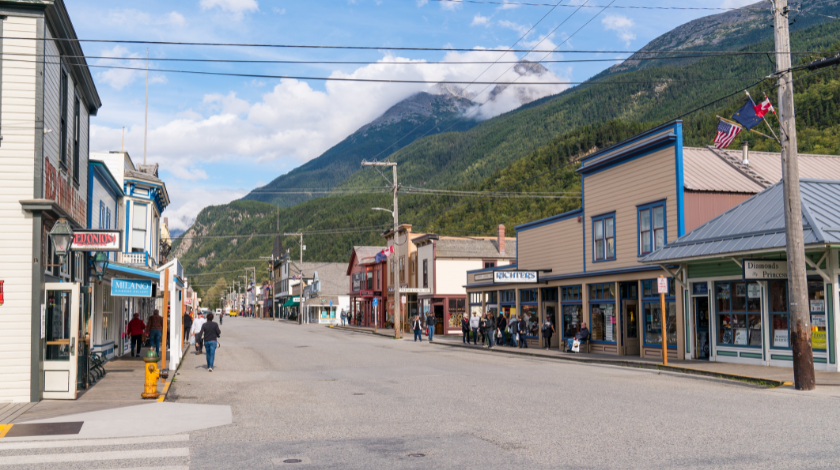
    Skagway’s wooden sidewalks creak under your feet in a rhythm that feels like a heartbeat. It’s a slow, steady sound, completely at odds with the chaotic boom this place once knew. I remember standing on Broadway Street for the first time, sandwiched between a massive cruise ship looming in the fjord and a perfectly preserved false-front building from 1898. It was a surreal feeling, like being in two centuries at once. Everyone talks about Skagway’s history, but until you’re there, feeling those planks beneath your boots and smelling the damp, mineral scent of the mountain air, it’s just a story. Let me tell you, the story is very much alive here.

    This town, with a permanent population you could fit into a few large houses, becomes a bustling hub each summer. But to see it only as an Alaska cruise port is to miss its deeper, wilder soul. Skagway’s real identity is etched into the cliff faces of the White Pass and woven into the quiet, persistent growth of spruce trees over forgotten trails. I want to share with you not just what to see, but how to feel the layers of this place, from its lawless Gold Rush roots to its present-day role as a gateway to profound natural beauty.

    The Echo of Dreams: Skagway’s Gold Rush Frenzy

    To understand Skagway today, you have to close your eyes and imagine the pandemonium of 1897-98. When gold was discovered in Canada’s Klondike, tens of thousands of hopeful stampeders descended on this tiny, muddy cove. Overnight, Skagway became a classic boomtown, but one of the most infamous. It wasn’t a place of guaranteed riches; it was a brutal filtering station.

    These men and women arrived with ornate Parisian crystal cabinets and steam-powered pianos, utterly unprepared for the Chilkoot or White Pass trails ahead. The rule was simple: to enter Canada, you had to bring a ton of supplies. That meant making dozens of trips up soul-crushing, icy slopes, moving your gear piece by piece. The stories hit hardest when you visit the Klondike Gold Rush National Historical Park museum on Broadway. It’s free, and it’s the essential first stop. Don’t rush through. Look at the faces in the photographs—the hope, the exhaustion, the desperation. It frames everything else you’ll see.

    And then there was the lawlessness. Skagway’s most famous villain was Jefferson “Soapy” Smith, a charming con artist who ran the town with a gang of thieves. His schemes were ingenious and cruel, robbing stampeders of their life’s savings before they even took a step toward the gold fields. His reign ended in a dramatic shootout on the Juneau Wharf with vigilante Frank Reid. Both men died. They’re buried in the Gold Rush Cemetery at the edge of town, a spot many tour buses fly past. It’s worth the short walk or shuttle ride. Soapy’s grave is often marked with pennies (a nod to his cons), while Reid’s is a grander monument. The quiet, mossy atmosphere there speaks volumes about how quickly frontier justice was meted out.

    A Journey on Iron Tracks: The White Pass & Yukon Route

    If you only do one paid excursion in Skagway, let it be this. The White Pass & Yukon Route railway isn’t just a train ride; it’s a moving history lesson and one of the most stunning scenic journeys in North America. I was lucky enough to get a seat by the window in an old-fashioned carriage. The train chugs slowly right from the downtown depot, which immediately makes you feel part of a living tradition.

    As you climb, the town shrinks into a colorful Lego set below. The train clings to the side of mountains, with the gorge dropping away precipitously just inches from the tracks. You’ll cross trestles that look impossibly delicate and enter pitch-black tunnels blasted through granite. The conductor narrates the trip, pointing out the old toll trail where you can still see the gouges from wagon wheels and, hauntingly, the “Dead Horse Gulch.” The name says it all. Over 3,000 pack animals died on that stretch of the trail, a grim testament to the rush’s brutal cost.

    The railway itself, built in 1898 during the rush, is an engineering miracle. To think it was constructed by hand in such hostile, remote conditions boggles the mind. You reach the summit of the White Pass, and the landscape opens into a vast, rocky, almost lunar expanse. On my trip, a low mist clung to the peaks, and for a moment, I could almost see the endless line of stampeders, heads down, trudging into the unknown. The train offers various trips, but the summit excursion is the classic. It gives you the full, powerful scope of what those gold seekers were up against. It’s humbling.

    Strolling a Living Museum: Broadway Street and Beyond

    After the train, wandering Broadway Street feels different. You appreciate the preservation. The entire downtown is part of the National Historical Park, so the false-front buildings aren’t replicas—they’re the real deal. The most photogenic is the Arctic Brotherhood Hall, entirely covered in over 20,000 pieces of driftwood. It’s surreal and beautiful.

    Pop into the Red Onion Saloon. It was a bordello during the gold rush, and the downstairs bar maintains that raucous spirit. Upstairs, you can take a tour with a “madam” guide for a fun, slightly cheeky look at that side of history. For a quieter experience, I love the Mascot Saloon museum. It’s set up exactly like a 1898 bar, complete with bullet holes in the painting behind the counter. It’s silent now, but you can easily imagine it thick with smoke and loud with tall tales.

    My advice? Get off Broadway. Walk a block over to State Street or Main Street. The houses here are where ordinary people lived—shopkeepers, railway workers, families who stayed after the rush faded. You’ll find beautiful, weathered homes with lush wildflower gardens. It reminds you that Skagway wasn’t just a temporary carnival; it became a community that weathered the long, quiet winters after the gold rush circus left town.

    The Trail Less Traveled: Skagway’s Natural Sanctuary

    Here’s a secret many day-trippers miss: Skagway is a fantastic place for an easy, breathtaking hike. The cruise ship crowds tend to cluster in a ten-block radius, but solitude is just a short walk away. My favorite escape is the trail to Lower Dewey Lake. The trailhead is literally a five-minute walk from the cruise ship docks. In less than thirty minutes of moderate uphill climbing through a dense, green forest, you emerge at the serene, tree-lined lake. The silence is profound, broken only by the call of a raven or the splash of a jumping fish. I sat on a rock there once for a full hour, and only two other people passed by. It was the perfect antidote to the bustling port below.

    For the more ambitious, the Chilkoot Trail begins nearby in Dyea, the ghost town rival to Skagway. While hiking the full 33-mile trail to Canada requires serious planning, you can day-hike the first few miles to get a tangible sense of the stampeders’ first steps. The trail is wide and worn deep—a physical scar on the land from the thousands of boots that passed over it. Walking it, even for a short way, is a deeply resonant experience. You’re literally walking in their footsteps, surrounded by rusting artifacts and the slow, patient reclamation of the forest.

    When to Visit and How to Make it Yours

    Skagway’s personality changes with the seasons. Summer (June-August) is vibrant, with up to four massive ships in port a day. Everything is open, the flowers are spectacular, and the energy is high. But it can feel crowded. May and September are the shoulder seasons. Fewer ships mean a quieter town. Some shops may have shorter hours, but you get a more authentic, peaceful feel. The fall colors in September are stunning, painting the mountainsides in gold and fire red. I’ve been in both seasons, and while summer is convenient, there’s a special magic in the quiet of September, when you feel the town beginning to exhale and prepare for winter’s deep sleep.

    If you’re coming from a cruise, you have choices. You can book an excursion through the ship for ease, or with a local operator (often for a better price). The train is a must-do for many, but excellent small-group van tours also go up the pass and into the Yukon, offering more flexibility to stop for photos with the famous “Welcome to Alaska” sign or at breathtaking lakes like Emerald Lake. Don’t be afraid to mix a structured tour with a few hours of solo exploration. Use the free National Park walking map, find that quiet trail, or just sit on a bench and watch the world go by.

    Conclusion

    Skagway’s legacy is a tapestry of extreme contrasts: greed and generosity, brutal hardship and incredible beauty, roaring crowds and profound silence. It’s a place where history isn’t locked in a glass case; it’s in the creak of the sidewalk, the steam of the train whistle, and the cool shade of a hiking trail that once saw so much desperate hope.

    You can come for the postcard and the souvenir, and there’s nothing wrong with that. But if you listen closely, you’ll leave with something more valuable than gold—a connection to a powerful human story, set against some of the most dramatic scenery on earth. Skagway doesn’t just tell you its history; if you let it, it makes you feel it in your bones. And that is a treasure that lasts long after you’ve sailed away.

    Frequently Asked Questions (FAQ)

    Q: Is Skagway worth visiting if I’m not on a cruise?
    A: Absolutely. While most arrive by ship, you can reach Skagway by the Alaska Marine Highway ferry, by car via the Alaska Highway, or even by flying into nearby Haines and taking a ferry. Visiting independently allows you to experience the town after the ships leave, which is a wonderfully peaceful and authentic time.

    Q: How much time do I need in Skagway?
    A: From a cruise ship, a full port day (6-10 hours) is enough to do one major excursion (like the train) and explore the historic downtown. To truly soak it in, including a longer hike or a trip to Dyea, consider an overnight stay.

    Q: What is the best time of year to visit Skagway?
    A: The main tourist season runs from early May to late September. July and August are the warmest and busiest. May and September offer fewer crowds and beautiful seasonal changes (spring blooms or fall colors), but slightly cooler and rainier weather.

    Q: Can you see the Northern Lights in Skagway?
    A: Yes, but primarily during the winter months (October to March) when there is enough darkness. The summer has nearly 24 hours of daylight, making aurora viewing impossible. Winter is a quiet, starkly beautiful, and very local time to visit.

    Q: What should I pack for a day in Skagway?
    A: Always, always pack layers. Even on a sunny summer day, weather can change rapidly. A waterproof jacket, comfortable walking shoes (not just sandals), a sweater, and sunglasses are essentials. The train can be cool, and the trails can be muddy.

  • Warabimochi: Japan’s Wobbly, Jelly-Like Summer Dessert Explained

    Warabimochi: Japan’s Wobbly, Jelly-Like Summer Dessert Explained

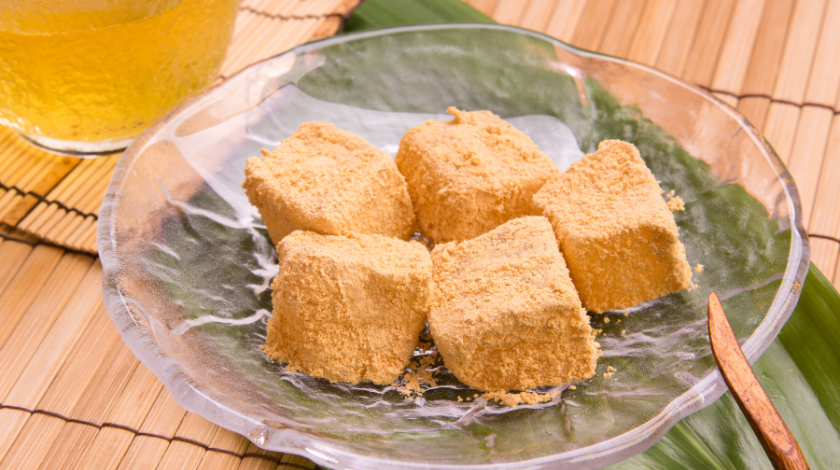
    I still remember my first real encounter with warabimochi. It wasn’t in a fancy restaurant, but at a cramped, bustling summer festival in a small Tokyo suburb. The air was thick with the smell of yakisoba and frying chicken, and I was desperately looking for something to cut through the humidity. That’s when I saw it: a small vendor shop with a simple sign that said “Warabimochi.” The dessert itself looked unassuming—little white cubes dusted with what looked like toasted peanut powder, resting on a bed of ice. I ordered one, and from the first bite, I was captivated. It was cool, soft, and had the most incredible, gently chewy yet melting texture. It was nothing like the dense, sticky mochi I had tried before. That moment sparked a curiosity in me to learn everything about this delicate sweet.

    So, what exactly is this treat that won me over? At its heart, warabimochi is a traditional Japanese wagashi, or confectionery, that is especially beloved during the hot summer months. If you imagine a dessert that sits somewhere between a firm jelly, a soft marshmallow, and a chewy mochi, you’re getting close. Its defining characteristic is its unique mouthfeel: it is wonderfully elastic and bouncy to the touch, yet it dissolves on the tongue with a clean, refreshing coolness. The flavor itself is subtly sweet and plain, which is intentional. It acts as a perfect canvas for its classic toppings, which provide the real burst of flavor.

    Many people hear “mochi” in the name and think it’s a type of rice cake. This is the first and most important thing to clarify. Regular mochi, the kind you find in daifuku or ozoni soup, is made from pounded glutinous rice. That process gives it a thick, stretchy, and sometimes gooey consistency. Warabimochi, on the other hand, is not made from rice at all. Traditionally, it is made from the starch extracted from the root of the warabi, or bracken fern. This bracken starch is what gives warabimochi its signature jelly-like, translucent, and less sticky texture. Think of it this way: if regular mochi is like soft, pounded dough, warabimochi is like a delicate, edible gelatin made from plants. Because of this, it’s often naturally gluten-free, which is a great bonus for anyone with dietary restrictions.

    The history of warabimochi is as refined as its texture. Its origins can be traced back to the Japanese aristocracy of the Nara and Heian periods, over a thousand years ago. Back then, the warabi starch was incredibly difficult and time-consuming to extract and process, making the resulting confection a luxurious delicacy reserved for the nobility and for special offerings at temples. It wasn’t until the Edo period, when production methods improved and sugar became more widely available, that warabimochi began to trickle down to the common people. Street vendors started selling it as a summer refreshment, much like the one I stumbled upon. This historical journey from an elite luxury to a popular seasonal street food adds a layer of depth to every bite, connecting you to centuries of Japanese culinary tradition.

    Now, let’s talk about the star of the show: the texture. Achieving that perfect, bouncy-yet-melting quality hinges almost entirely on the starch. Authentic warabimochi uses pure warabi starch, which can be quite expensive. In modern times and in many home recipes, a blend of potato starch and katakuriko (potato starch) or even tapioca starch is often used to mimic the effect at a lower cost. The process involves dissolving the starch in water with sugar, then cooking it over heat while stirring constantly. This is where the magic happens. As the mixture heats up, it transforms from a milky liquid into a thick, transparent, and incredibly glue-like paste. It’s a workout for your arms, but watching the change is fascinating. Once cooked, it’s poured into a tray, chilled, and then cut into cubes.

    Of course, plain jelly cubes are only half the experience. Warabimochi is defined by its classic duo of toppings. The most iconic partner is kinako. Kinako is simply roasted soybean flour, and it has a warm, nutty, slightly sweet flavor that is utterly delicious. The toasted aroma complements the cool, plain warabimochi perfectly. The cubes are typically tossed in kinako to coat them lightly. The second classic topping is kuromitsu, which translates to “black honey.” It’s not honey, but a dark, viscous sugar syrup made from kokuto, or Japanese black sugar. It has a rich, molasses-like flavor with a deep caramel complexity. Often, warabimochi is served with a drizzle of kuromitsu over the kinako-coated cubes, creating a perfect harmony of nutty, sweet, and deep flavors. Sometimes, you might find it served with a side of matcha powder for dipping, adding an earthy, bitter note.

    If you’re feeling inspired to try warabimochi, you have a few options. In Japan, from late spring through summer, you can find it at wagashi specialty shops, department store food halls, and of course, at festivals and street stalls. Some shops sell it freshly made and kept on ice, which is the absolute best way to have it. Outside of Japan, your best bet is a local Japanese grocery store, often in the refrigerated or frozen dessert section. Asian supermarkets might also carry pre-packaged versions. And if you’re feeling adventurous, making it at home is entirely possible. While sourcing true warabi starch can be a challenge, many successful recipes use a combination of potato and tapioca starch to get very close to that authentic texture. The process is simple, though it requires constant stirring. The reward, however, is immense: a homemade, refreshing dessert that will transport you straight to a Japanese summer evening.

    In conclusion, warabimochi is more than just a dessert; it’s a sensory experience that encapsulates a season. It represents a beautiful aspect of Japanese food culture—the appreciation of subtlety, texture, and seasonal refreshment. It’s not overly sweet or heavy. Instead, it’s a mindful treat that cools you down and offers a moment of simple pleasure. For me, it will always be tied to the memory of that humid festival, a delightful surprise in a humble setting. Whether you seek it out at a shop, attempt to make it yourself, or are just happy to know about it, warabimochi is a fascinating piece of Japan’s culinary story. It’s a testament to the idea that the most memorable foods are often the ones that feel refreshingly different and are rooted in a long, cherished history.

    FAQ Section

    Q: Is warabimochi gluten-free?
    A: Traditionally, yes. Authentic warabimochi made purely from warabi (bracken) starch, sugar, and water is naturally gluten-free. However, always check pre-packaged versions or restaurant menus, as some modern variations or toppings might introduce gluten. When making it at home with potato/tapioca starch, it remains gluten-free.

    Q: Can I make warabimochi with cornstarch or regular flour?
    A: I wouldn’t recommend it for an authentic result. Cornstarch will set firmer and more opaque, like a typical pudding. Regular wheat flour will create a completely different, doughy texture and isn’t gluten-free. The unique texture relies on specific starches like bracken, potato, or tapioca.

    Q: How do I store leftover warabimochi?
    A: It’s best eaten fresh on the day it’s made. If you must store it, keep it in an airtight container in the refrigerator for up to 1-2 days. Be aware that it will harden and lose its ideal soft texture over time. Do not freeze it, as freezing will ruin its delicate structure.

    Q: Why is my homemade warabimochi too hard/too soft?
    A: Texture issues usually come from the starch-to-water ratio or cooking time. Too hard: you may have used too much starch or overcooked it. Too soft/never setting: you may not have cooked the starch mixture for long enough to fully activate the thickening power. Constant, vigorous stirring until it becomes very thick and transparent is key.

    Q: Is warabimochi healthy?
    A: Like most sweets, it should be enjoyed in moderation. Its primary ingredients are starch and sugar, so it is a carbohydrate-rich dessert. However, it is often lower in fat than many Western desserts. The kinako topping adds some protein and nutrients from soybeans.